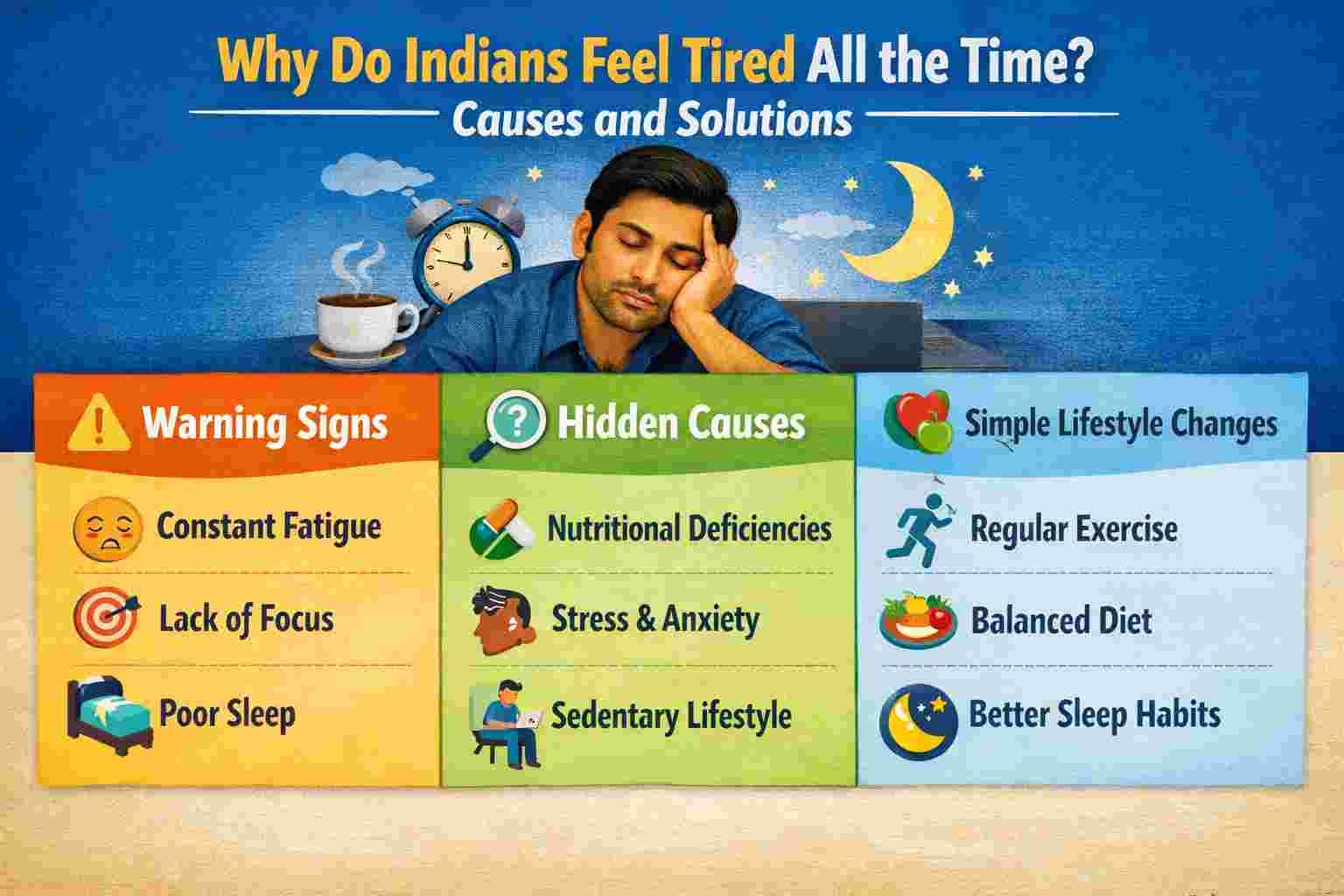
Quick Answer Many Indians feel tired all the time due to a combination of nutritional deficiencies (especially Vitamin B12 and iron), poor sleep habits, chronic stress, unhealthy dietary patterns, sedentary lifestyles, and high screen time. These factors, often occurring together, drain energy levels and lead to persistent fatigue affecting daily productivity and quality of life. |
In Short: Key Reasons for Constant Tiredness in Indians • Vitamin B12 and iron deficiencies are among the most common causes of fatigue in India. • Poor sleep quality and irregular sleep schedules disrupt the body's recovery cycle. • Work-related stress and mental overload significantly reduce physical and mental energy. • Unhealthy diets high in refined carbohydrates and low in proteins contribute to low energy. • Dehydration and sedentary routines worsen fatigue symptoms throughout the day. |
What Does Constant Tiredness Mean?
Constant tiredness, also called chronic fatigue, is a persistent feeling of low energy, physical exhaustion, or mental drain that does not improve with rest or sleep. It is different from normal tiredness that follows physical effort.
If you feel tired all the time without an obvious reason, it may indicate an underlying health issue, nutritional deficiency, or lifestyle-related problem that needs attention.
| Fatigue: A state of persistent physical or mental exhaustion that reduces a person's capacity to perform daily activities. It can be caused by lifestyle factors, medical conditions, or nutritional deficiencies. |
| Chronic Tiredness: Ongoing fatigue lasting more than six months, not relieved by rest, often linked to conditions like anemia, vitamin deficiency, thyroid disorders, or chronic stress. |
| Vitamin Deficiency Fatigue: Tiredness caused specifically by insufficient levels of essential vitamins and minerals, particularly Vitamin B12, Vitamin D, and iron, which are critical for energy production in the body. |
| Lifestyle-Related Exhaustion: Fatigue arising from poor daily habits such as irregular sleep, unhealthy eating, excessive screen time, lack of physical movement, and unmanaged stress. |
Why Do Indians Feel Tired All the Time?
India presents a unique combination of dietary habits, work culture, climate conditions, and lifestyle patterns that collectively increase the risk of chronic fatigue. Studies indicate that a large percentage of the Indian population suffers from Vitamin B12 deficiency, largely due to vegetarian diets. Iron deficiency anemia is also highly prevalent, particularly among women and adolescents.
Beyond nutrition, rapid urbanization has introduced sedentary work environments, late-night screen exposure, and high psychological stress into everyday life. These factors combine to create widespread and persistent tiredness across age groups.
Common Causes of Fatigue in India
The following are the most frequently identified reasons for fatigue in Indians, supported by nutritional research and public health data:
- Vitamin B12 Deficiency — A major cause in vegetarian and vegan populations; B12 is essential for red blood cell production and nerve function.
- Iron Deficiency Anemia — Reduces oxygen transport in the blood, directly causing weakness, breathlessness, and constant tiredness.
- Poor Sleep Quality — Irregular schedules, late nights, and disrupted sleep cycles prevent the body from fully recovering.
- Chronic Stress and Work Pressure — Mental exhaustion from work overload, financial pressure, and family responsibilities depletes energy reserves.
- Excess Screen Time — Blue light exposure from phones and laptops suppresses melatonin, disrupting sleep and causing daytime fatigue.
- Unhealthy Eating Habits — Diets high in refined carbohydrates, fried foods, and low in protein lead to energy crashes throughout the day.
- Dehydration — Even mild dehydration reduces concentration and physical energy; many Indians do not drink enough water daily.
- Thyroid Disorders — Hypothyroidism is underdiagnosed in India and is a significant cause of persistent unexplained fatigue.
- Sedentary Lifestyle — Lack of regular physical movement slows metabolism and reduces overall stamina and energy output.
- Vitamin D Deficiency — Despite high sunlight availability, Vitamin D deficiency is common in urban Indians due to indoor lifestyles.
Vitamin Deficiency and Tiredness
Vitamin B12 deficiency is estimated to affect over 47% of the Indian population, largely because animal-derived foods are the primary dietary source of B12. Vegans and vegetarians are at the highest risk. Symptoms include persistent fatigue, weakness, tingling in the limbs, and difficulty concentrating.
Iron deficiency is another leading cause of fatigue in Indians, particularly in women of reproductive age. Without adequate iron, the blood cannot carry enough oxygen to muscles and organs, resulting in constant tiredness and reduced stamina. Vitamin D and magnesium deficiencies also contribute significantly to low energy and muscle weakness.
Poor Sleep Quality
India consistently ranks among the most sleep-deprived nations globally. A large proportion of urban Indians sleep fewer than seven hours per night. Late-night mobile phone use, irregular work hours, and high stress levels all negatively impact sleep quality.
Poor sleep prevents the body from completing restorative sleep cycles, leading to fatigue even after eight hours in bed. Conditions like sleep apnea, which often go undiagnosed, further worsen sleep quality and energy levels.
Stress and Mental Fatigue
Chronic stress activates the body's fight-or-flight response, which, when prolonged, depletes cortisol reserves and leaves the body in a state of constant exhaustion. Work pressure, academic stress, family responsibilities, and financial concerns are among the top stressors affecting Indians.
Mental fatigue is as energy-draining as physical fatigue. Overthinking, anxiety, and emotional stress all reduce the brain's ability to regulate energy efficiently, leading to persistent tiredness throughout the day.
Poor Diet and Lifestyle
Many Indians rely heavily on refined carbohydrates such as white rice, maida-based foods, and sugary snacks, which cause rapid blood sugar spikes followed by crashes. These energy crashes contribute directly to post-meal fatigue and low energy levels in the afternoon.
Skipping breakfast, eating late dinners, relying on excessive chai or coffee for energy, and consuming insufficient protein all disrupt the body's metabolic balance and energy regulation. Poor gut health, which is increasingly common in India, also affects nutrient absorption and energy production.
Lack of Physical Activity
Physical inactivity is a paradoxical cause of tiredness. A sedentary lifestyle weakens the cardiovascular system, reduces lung capacity, and slows down metabolism. Regular movement improves blood circulation, oxygen delivery, and endorphin levels, all of which boost energy.
Many urban Indians spend 8 to 10 hours seated at desks or in vehicles each day without any structured physical activity. This lack of movement progressively reduces the body's ability to sustain energy throughout the day.
How to Reduce Tiredness Naturally
Fatigue caused by lifestyle and nutritional factors is largely reversible with consistent changes. The following steps can help improve energy levels naturally:
- Improve Sleep Hygiene — Maintain a consistent sleep schedule. Aim for 7 to 8 hours of sleep. Avoid screens at least 30 minutes before bedtime. Keep the bedroom cool, dark, and quiet.
- Correct Nutritional Deficiencies — Get a blood test to check Vitamin B12, iron, Vitamin D, and thyroid levels. Take doctor-recommended supplements and increase dietary sources of these nutrients.
- Eat a Balanced Diet — Include protein (dal, eggs, paneer, chicken), complex carbohydrates (oats, brown rice), healthy fats (nuts, seeds), and plenty of vegetables in every meal. Avoid refined foods and excess sugar.
- Stay Hydrated — Drink at least 2.5 to 3 litres of water daily. Limit excessive tea and coffee intake, especially after noon, as caffeine can disrupt sleep quality.
- Manage Stress — Practice daily stress-management techniques such as deep breathing, yoga, meditation, or a 10-minute mindfulness session. Set healthy work-life boundaries.
- Exercise Regularly — Aim for at least 30 minutes of moderate physical activity five days a week. Walking, yoga, cycling, or swimming are all effective options for boosting energy levels.
- Reduce Screen Time — Limit total daily screen time, especially during evenings. Use blue light filters on devices and take regular screen breaks using the 20-20-20 rule (every 20 minutes, look 20 feet away for 20 seconds).
- Consult a Doctor — If tiredness persists despite lifestyle changes, consult a physician to rule out thyroid disorders, diabetes, sleep apnea, or depression, which often present with chronic fatigue.
Common Causes of Fatigue vs. Recommended Solutions
| Cause | Symptoms | Suggested Solution |
|---|---|---|
| Vitamin B12 Deficiency | Fatigue, tingling, poor memory | Supplements + eggs, dairy, or B12-fortified foods |
| Iron Deficiency Anemia | Weakness, breathlessness, pale skin | Iron-rich foods (spinach, lentils) + Vitamin C intake |
| Poor Sleep Quality | Daytime drowsiness, difficulty focusing | Consistent sleep schedule, no screens before bed |
| Chronic Stress | Mental exhaustion, irritability, insomnia | Yoga, meditation, breathing exercises |
| Dehydration | Headaches, dizziness, low energy | Drink 2.5-3L of water daily |
| Sedentary Lifestyle | Low stamina, body stiffness | 30 minutes of exercise, 5 days a week |
| Poor Diet | Energy crashes, bloating, brain fog | Balanced meals with protein, fiber, and complex carbs |
| Vitamin D Deficiency | Muscle weakness, low mood, fatigue | Sunlight exposure + Vitamin D supplements |
Common Mistakes That Make Tiredness Worse
Avoiding these common habits can prevent fatigue from worsening:
- Skipping Breakfast — Skipping the morning meal causes blood sugar to drop early in the day, leading to mid-morning energy crashes and difficulty concentrating.
- Drinking Too Much Tea or Coffee — Excessive caffeine provides short-term alertness but disrupts sleep quality, increases cortisol, and worsens long-term fatigue.
- Irregular Sleep Patterns — Going to bed at different times each night confuses the body's internal clock, reducing sleep quality even when hours are adequate.
- Not Drinking Enough Water — Dehydration is often overlooked as a cause of fatigue. Many people mistake thirst for hunger and do not hydrate adequately.
- Relying on Energy Drinks or Sugar for Quick Energy — These create rapid energy spikes followed by crashes, making fatigue worse over time.
- Ignoring Underlying Health Conditions — Tiredness caused by thyroid disorders, anemia, diabetes, or sleep apnea will not improve without medical treatment.
- Prolonged Sedentary Behavior — Sitting for long hours without movement reduces circulation and increases mental and physical sluggishness throughout the day.
Quick Answers
| Why do I feel tired all the time?: Persistent tiredness is most commonly caused by nutritional deficiencies (B12, iron, Vitamin D), poor sleep, chronic stress, dehydration, or an underlying medical condition such as thyroid dysfunction or anemia. |
| Is vitamin deficiency linked to fatigue?: Yes. Vitamin B12, iron, and Vitamin D deficiencies are among the most common causes of constant tiredness. These nutrients are essential for energy production, oxygen transport, and nerve function. |
| Can stress cause constant tiredness?: Yes. Chronic stress keeps the body in a state of heightened alert, which depletes energy reserves and disrupts sleep, both of which cause sustained physical and mental fatigue. |
| Does lack of sleep cause fatigue?: Yes. Insufficient or poor-quality sleep prevents the body from completing its restorative processes, directly resulting in tiredness, reduced concentration, and low energy the following day. |
Frequently Asked Questions (FAQs)
Why do Indians feel tired even after sleeping?
Feeling tired after a full night's sleep often indicates poor sleep quality rather than insufficient sleep duration. Causes include sleep apnea, Vitamin B12 or iron deficiency, thyroid imbalance, excessive screen use before bed, and high stress levels. Consulting a doctor and checking nutritional levels is advisable if this persists.
Which vitamin deficiency causes tiredness?
Vitamin B12 deficiency is the most common vitamin-related cause of tiredness in India, especially in vegetarians. Iron deficiency (leading to anemia), Vitamin D deficiency, and magnesium deficiency also frequently cause fatigue and low energy levels.
Can dehydration cause fatigue?
Yes. Even mild dehydration of 1 to 2% of body weight can cause significant fatigue, reduced concentration, headaches, and lower physical performance. Drinking adequate water throughout the day is one of the simplest ways to reduce tiredness naturally.
How can I improve my energy levels naturally?
Improving energy naturally involves eating a balanced diet rich in protein and complex carbohydrates, correcting nutritional deficiencies, sleeping 7 to 8 hours consistently, exercising regularly, managing stress, limiting caffeine and screen time, and staying well hydrated.
Is constant tiredness a sign of a serious illness?
Constant tiredness can indicate conditions such as hypothyroidism, anemia, diabetes, depression, or sleep apnea. If fatigue persists for more than two to four weeks without improvement despite lifestyle changes, a medical evaluation is strongly recommended.
What foods help fight tiredness in Indians?
Foods that naturally boost energy include lentils and legumes (iron and protein), leafy green vegetables (iron and folate), eggs and dairy (Vitamin B12), nuts and seeds (magnesium and healthy fats), bananas (natural sugars and potassium), and oats (slow-release carbohydrates).
Does lack of physical activity cause fatigue?
Yes. A sedentary lifestyle reduces cardiovascular efficiency, slows metabolism, and decreases oxygen supply to the body's tissues. Regular physical activity, even a 30-minute daily walk, significantly improves stamina and reduces tiredness over time.
How long does it take to recover from vitamin deficiency fatigue?
Recovery time depends on the severity of the deficiency and treatment consistency. With proper supplementation and dietary changes, Vitamin B12 and iron deficiency fatigue typically improves within four to twelve weeks. Vitamin D levels may take longer to normalize. Always follow a doctor's guidance for supplementation.
Medical Disclaimer: This article is for informational purposes only and does not constitute medical advice. Always consult a qualified healthcare professional for diagnosis and treatment of any medical condition.
Published by AdzioHub | Health & Wellness Information Platform