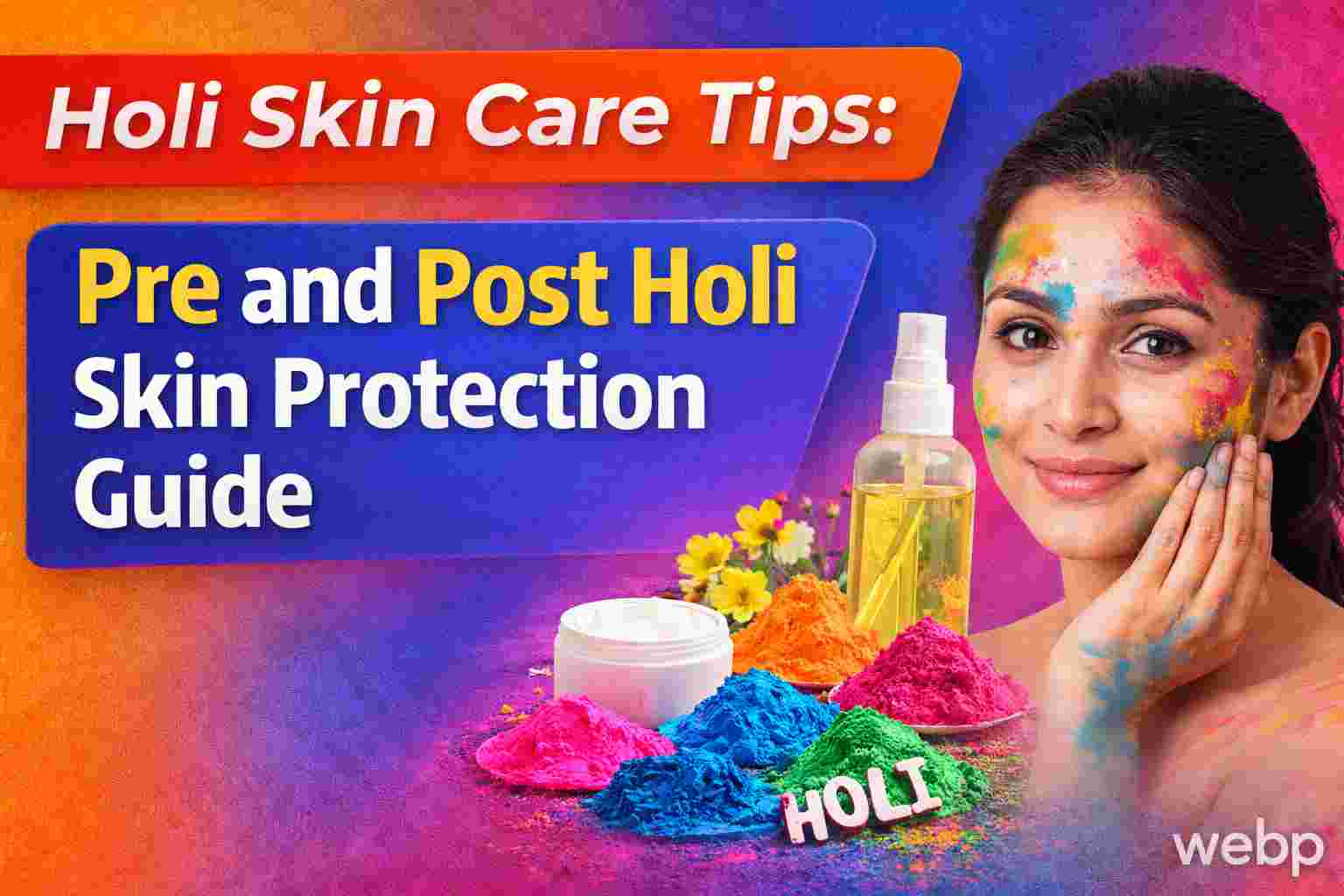
Holi skin care involves applying a protective barrier — such as coconut oil, sunscreen, or moisturiser — before playing with colours, and following a gentle cleansing and rehydration routine afterwards. Key steps include moisturising thoroughly before exposure, using natural colour-removal methods post-Holi, and treating any skin irritation or allergy promptly with dermatologist-approved remedies.
In Short:
- Apply coconut oil, olive oil, or a thick moisturiser over all exposed skin and hair before playing Holi to create a protective barrier against chemical colours.
- Use mild, sulfate-free cleansers and lukewarm water to remove Holi colours — avoid scrubbing aggressively, which worsens skin damage.
- Natural ingredients such as raw milk, besan (gram flour), and aloe vera gel are effective for safely removing stubborn colour from skin.
- Skin allergies after Holi are commonly caused by synthetic dyes containing lead oxide, copper sulfate, and industrial chemicals — treatment involves antihistamines, calamine lotion, and medical consultation for severe reactions.
- Post-Holi skin care should focus on deep cleansing, intensive moisturising, sun protection, and avoiding harsh chemical products for at least 48 hours.
What Are Holi Skin Care Tips?
Definition: Holi skin care tips are dermatologically informed practices followed before, during, and after the Holi festival to protect skin from the harmful effects of synthetic colours, prolonged sun exposure, and water contact. These tips aim to prevent pigmentation, dryness, allergic reactions, and chemical burns caused by industrial dyes commonly used in Holi colours.
Synthetic Holi colours available in the market frequently contain heavy metals and industrial chemicals that are not formulated for skin contact. Proper skin preparation and post-colour removal significantly reduce the risk of short-term irritation and long-term skin damage.
Pre-Holi Skin Care Tips: How to Protect Skin During Holi
Definition: Pre-Holi skin care refers to the protective skin preparation steps taken in the 12 to 24 hours before playing Holi, designed to create a physical and moisture barrier between the skin and colour pigments.
Step-by-Step Pre-Holi Skin Care Routine
Step 1: Apply a Heavy Moisturiser or Body Lotion the Night Before Use a thick, oil-based moisturiser on your face, neck, arms, and legs the night before Holi. Well-hydrated skin allows colours to sit on the surface rather than penetrating the skin barrier.
Step 2: Apply Coconut Oil or Olive Oil on the Morning of Holi Before stepping out, coat all exposed skin with coconut oil, olive oil, or petroleum jelly. These create a physical barrier that makes colour removal significantly easier and reduces direct skin contact with pigments.
Step 3: Use a Broad-Spectrum Sunscreen (SPF 30 or Higher) Apply sunscreen over the oil layer on your face. Holi is typically played outdoors for several hours, and UV exposure combined with chemical colour contact increases the risk of pigmentation and irritation.
Step 4: Protect Your Lips Apply a thick layer of lip balm or petroleum jelly on your lips. Lips lack the same protective outer layer as the rest of the skin and are particularly vulnerable to chemical dyes.
Step 5: Cover Hair and Scalp Apply coconut oil or a leave-in conditioner generously to your hair and scalp. Tie hair up and consider wearing a cap or bandana to limit direct colour contact with the scalp.
Step 6: Trim and Cover Nails Keep nails trimmed and apply clear nail polish or rub petroleum jelly around the nail beds to prevent colour from staining and accumulating under nails.
Step 7: Wear Full-Coverage Clothing Where Possible Choose full-sleeve cotton clothes that cover as much skin as possible. Cotton is breathable and easier to wash, and physical coverage remains the most reliable skin protection available.
Post-Holi Skin Care Routine: How to Remove Holi Colour from Skin Naturally
Definition: Post-Holi skin care is the cleansing, soothing, and rehydration routine followed after Holi to safely remove colour residue, restore the skin's natural pH balance, and repair any surface-level damage caused by chemical dyes or prolonged sun and water exposure.
Step-by-Step Post-Holi Skin Care Routine
Step 1: Do Not Rub Dry Colour — Wet It First Before attempting to remove colour, splash lukewarm water on the coloured areas. Removing dry colour by rubbing causes micro-abrasions on the skin surface and drives pigment deeper into pores.
Step 2: Use a Mild, Sulfate-Free Cleanser Wash with a gentle face wash or body wash free from sulfates and alcohol. Harsh cleansers strip the skin of its natural oils and worsen post-colour dryness and irritation.
Step 3: Apply a Natural Colour-Removal Agent
The following natural ingredients are effective and dermatologist-safe for removing Holi colour from skin:
| Natural Ingredient | Method | Suitable For |
|---|---|---|
| Raw milk + besan paste | Apply, leave 10 minutes, wash off | Face and body |
| Coconut oil | Massage gently, wipe with soft cloth | Face, hands, and feet |
| Aloe vera gel | Apply and rinse after 15 minutes | Sensitive and irritated skin |
| Curd (plain yogurt) | Apply as a pack, rinse with lukewarm water | Dry and normal skin |
| Cucumber juice | Apply with cotton, leave 10 minutes | Face and neck |
| Lemon juice (diluted) | Mix with equal parts water, apply briefly | Stubborn stains on hands and feet only |
Note: Lemon juice should not be applied undiluted or left on for extended periods, particularly on the face or sensitive areas, as it can cause irritation and increase photosensitivity.
Step 4: Take a Gentle Shower — Not a Hot One Use lukewarm water, not hot water. Hot water removes natural oils and worsens post-Holi skin dryness. Limit shower duration to under 10 minutes.
Step 5: Apply a Soothing Moisturiser Immediately After Showering Apply a fragrance-free moisturiser or aloe vera gel within two minutes of stepping out of the shower, while skin is still slightly damp. This locks in moisture and accelerates skin recovery.
Step 6: Apply Calamine Lotion on Irritated Areas If any area shows mild redness, itching, or a rash, apply calamine lotion. It reduces surface irritation and has mild antiseptic properties suitable for post-colour skin reactions.
Step 7: Avoid Makeup for 24 to 48 Hours Allow skin to recover before applying foundation, concealer, or other face products. Chemical colours already stress the skin barrier — adding cosmetics extends recovery time.
Skin Allergy After Holi: Identification and Treatment
Definition: Skin allergy after Holi refers to an immune or irritant response triggered by chemical compounds in synthetic colours, including contact dermatitis, urticaria (hives), or chemical burns. Symptoms include prolonged redness, intense itching, swelling, blistering, or skin peeling beyond 24 hours after colour contact.
How to Identify a Holi Skin Allergy
- Mild reaction: Redness, dryness, and mild itching that subsides within 12 to 24 hours.
- Moderate reaction: Persistent itching, visible rash, or swelling lasting more than 24 hours.
- Severe reaction: Blisters, skin peeling, facial swelling, or difficulty breathing — requires immediate medical attention.
Treatment Options for Skin Allergy After Holi
For mild reactions: Apply calamine lotion, use a cold compress, and keep the area moisturised with a fragrance-free cream. Avoid scratching.
For moderate reactions: Over-the-counter antihistamine tablets (such as cetirizine) can reduce itching and inflammation. Consult a pharmacist before use.
For severe reactions: Do not self-medicate. Consult a dermatologist or visit a skin clinic promptly. Prescription-strength topical corticosteroids or oral medication may be required.
Common Mistakes in Holi Skin Care
1. Skipping pre-Holi oil application Many people apply moisturiser but skip the oil layer. Oil provides a superior barrier compared to water-based moisturisers alone, as it does not mix with the pigment compounds in synthetic colours.
2. Using hot water to remove colour Hot water opens pores and drives colour pigment deeper into the skin. Always use lukewarm or cool water for post-Holi cleansing.
3. Scrubbing skin aggressively Vigorous scrubbing with a loofah or rough cloth causes micro-tears in the skin and worsens irritation. Use fingertips or a soft washcloth with gentle circular motions.
4. Using undiluted lemon juice on the face Lemon juice is acidic and can cause chemical irritation, especially on sensitive or already-stressed post-Holi skin. Always dilute with equal parts water and limit contact time.
5. Applying colour-removal agents repeatedly in one session Repeating natural scrubs or pack applications multiple times in one sitting over-exfoliates the skin. One gentle application is sufficient per cleansing session.
6. Ignoring scalp and hair care Most post-Holi routines focus on facial skin. The scalp and hair shaft are equally exposed to chemical dyes and require oil treatment and gentle shampooing within a few hours of colour contact.
7. Delaying treatment of allergic reactions Waiting to see if a reaction resolves on its own is a common mistake. Skin reactions from synthetic Holi colours can worsen over 24 to 48 hours if left untreated.
Quick Answer Section
What should I apply on skin before Holi? Apply coconut oil or olive oil over all exposed skin before playing Holi. Follow with a broad-spectrum SPF 30+ sunscreen on the face. This creates a physical barrier that makes colour easier to remove and reduces direct skin contact with pigments.
How do I remove Holi colour from skin naturally? Apply a paste of besan and raw milk, leave it for 10 minutes, and rinse with lukewarm water. Coconut oil massaged gently over stained areas is also effective. Avoid scrubbing and use only mild cleansers.
How do I protect my skin during Holi? Wear full-sleeve cotton clothing, apply a thick layer of oil or petroleum jelly on exposed skin, use SPF 30+ sunscreen on the face, and apply lip balm before playing. Opt for natural or organic colours where possible.
What is the best treatment for skin allergy after Holi? For mild allergies, apply calamine lotion and keep the area moisturised. For moderate reactions with persistent itching or rash, take an over-the-counter antihistamine and consult a pharmacist. Seek immediate medical attention for blistering or severe swelling.
How long does Holi colour take to fade from skin? With proper post-Holi cleansing using natural agents, most colour fades within one to three days. Stubborn stains on hands and feet may take up to five days to fully disappear.
Frequently Asked Questions
1. What are the best pre-Holi skin care tips for sensitive skin? People with sensitive skin should apply fragrance-free petroleum jelly or aloe vera-based sunscreen before Holi. Avoid synthetic colours entirely if possible and opt for verified natural or organic alternatives. Perform a patch test with any colour before full skin contact.
2. Can Holi colours cause permanent skin damage? Permanent skin damage from Holi colours is uncommon but possible in cases of severe allergic reactions or repeated exposure to colours containing lead oxide or industrial chemicals. Prompt treatment of reactions and proper skin preparation significantly reduce this risk.
3. Is it safe to use turmeric to remove Holi colour from skin? Turmeric has mild bleaching properties and can help with residual colour removal, but it may also leave a temporary yellow tint on lighter skin tones. Mix a small amount with raw milk or coconut oil and rinse off quickly for best results.
4. How soon after Holi should I start my post-skin care routine? Begin your post-Holi skin care routine within two to three hours of finishing play, while colour is still relatively fresh and easier to remove. Waiting longer allows colour to set into the skin and increases removal difficulty.
5. Are natural Holi colours completely safe for skin? Natural or organic Holi colours made from flower extracts and vegetable dyes are significantly safer than synthetic colours. However, even natural colours may cause reactions in people with specific plant allergies. Read the ingredient list before use.
6. What should I avoid eating or applying after a Holi skin reaction? Avoid applying any product containing alcohol, fragrance, retinol, or strong acids (such as AHA or BHA) on reacting skin. Internally, avoid alcohol, which dilates blood vessels and can worsen skin inflammation.
7. Can children use the same pre and post-Holi skin care routine? Children have more sensitive skin than adults and require extra precaution. Use only mild, fragrance-free moisturisers and petroleum jelly as barriers. Opt strictly for natural colours for children and follow the same post-Holi cleansing steps using gentler formulations. Consult a paediatrician before using antihistamines for children.
8. How do I remove Holi colour from lips safely? Apply a thick layer of coconut oil or petroleum jelly on lips and leave for five minutes. Wipe gently with a soft cotton pad. Repeat once if needed. Do not use lemon juice or scrubs on the lip area.
Find Trusted Skincare and Beauty Services Near You on AdzioHub
If you are looking for verified dermatologists, skin clinics, beauty parlours, or organic skincare product sellers in your city, AdzioHub is India's free classified platform connecting you with local service providers across all major cities.
Browse listings for skincare services, health and beauty product sellers, and wellness professionals in your area — or post your own free ad if you offer related services. AdzioHub is free to use with no registration charges, covering cities across India including Delhi, Mumbai, Bengaluru, Noida, Ghaziabad, Pune, and Hyderabad.
Visit AdzioHub today to find trusted local services or post your free classified ad in under five minutes.