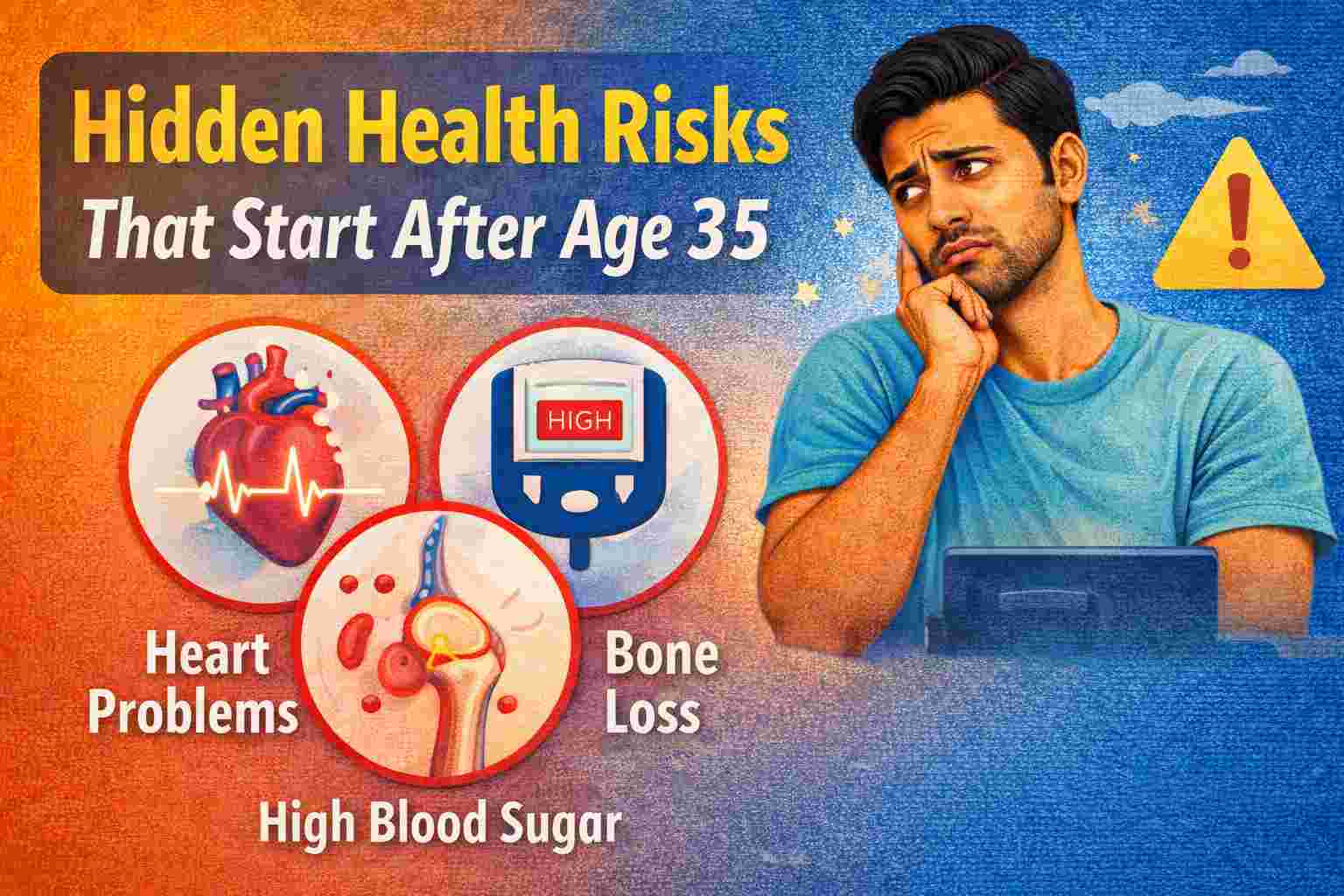
Quick Answer Many serious health conditions begin developing silently after age 35. Hormonal shifts, slower metabolism, and accumulated lifestyle habits increase the risk of high blood pressure, diabetes, thyroid disorders, and bone loss — often without obvious symptoms. Early screening and preventive care are essential to detect and manage these hidden health risks before they progress. |
In Short: Key Takeaways
- Metabolism slows significantly after age 35, increasing the risk of weight gain and related diseases.
- Chronic conditions such as hypertension, pre-diabetes, and thyroid disorders often develop without noticeable symptoms.
- Vitamin deficiencies — especially B12, D, and iron — become more common and are frequently overlooked.
- Preventive health screenings after 35 can catch hidden problems before they become serious.
- Lifestyle changes including diet, exercise, and stress management significantly reduce long-term health risks.
Why Health Risks Increase After Age 35
After age 35, the human body undergoes measurable physiological changes. Hormonal production slows, cellular repair becomes less efficient, and years of dietary and lifestyle patterns begin to take a visible toll.
These changes do not always produce obvious symptoms in early stages. This is what makes health problems after 35 particularly dangerous — they develop silently and are often caught only when complications arise.
| Metabolic Slowdown: A gradual reduction in the body's resting metabolic rate, leading to lower energy expenditure, fat accumulation, and increased risk of metabolic diseases such as type 2 diabetes and obesity. |
| Chronic Health Conditions: Long-term medical conditions that develop gradually over time, often influenced by genetics, lifestyle, and environment. Examples include hypertension, diabetes, and cardiovascular disease. |
| Preventive Health Screening: A proactive medical examination designed to detect early signs of disease before symptoms appear, including blood tests, imaging, and physical assessments. |
| Lifestyle-Related Diseases: Health conditions directly linked to daily habits such as poor diet, inactivity, smoking, or chronic stress. These are largely preventable with behavioral changes. |
Read Also: - Diabetes Control Guide: A Complete Roadmap to Managing Blood Sugar Naturally
Hidden Health Problems That Appear After Age 35
1. High Blood Pressure
High blood pressure (hypertension) is often called the 'silent killer' because it rarely causes noticeable symptoms until it reaches dangerous levels. After age 35, arterial stiffness increases and blood pressure tends to rise gradually.
Symptoms to watch: persistent headaches, dizziness, vision changes, or nosebleeds. However, most people with hypertension feel perfectly normal until a cardiac event occurs.
2. Vitamin Deficiencies
Deficiencies in Vitamin B12, Vitamin D, iron, and magnesium become increasingly common after 35 due to reduced nutrient absorption, dietary gaps, and hormonal changes.
Early signs include fatigue, brain fog, muscle weakness, frequent illness, and mood disorders. These symptoms are easy to dismiss but may indicate a serious underlying deficiency.
3. Thyroid Disorders
Both hypothyroidism (underactive thyroid) and hyperthyroidism (overactive thyroid) frequently emerge in the mid-30s to 40s, particularly in women. The thyroid regulates metabolism, energy, and mood.
Warning signs include unexplained weight changes, hair thinning, sensitivity to cold or heat, fatigue, irregular heartbeat, and mood disturbances.
4. Early Signs of Diabetes
Pre-diabetes and type 2 diabetes often develop silently for years before diagnosis. After age 35, insulin resistance increases, especially without regular physical activity or with a high-carbohydrate diet.
Key early symptoms include increased thirst, frequent urination, slow-healing wounds, and unexplained fatigue. Fasting blood glucose tests can identify pre-diabetes years before it progresses.
5. Heart Health Issues
Cardiovascular risk accelerates after 35 as cholesterol plaques accumulate, arterial flexibility decreases, and inflammation rises. Heart disease remains the leading cause of death in adults over 35.
Early warning signs may include mild chest discomfort, shortness of breath during light activity, palpitations, or swollen ankles. Regular lipid panels and ECGs are important diagnostic tools.
6. Bone Density Loss
Bone density peaks in the late 20s and begins declining gradually in the mid-30s. This process accelerates in women following perimenopause but also affects men. Low bone density leads to osteoporosis and increased fracture risk.
Hidden symptoms include back pain, gradual height loss, and teeth or gum problems. A DEXA scan can measure bone density and detect early-stage osteoporosis.
Common Hidden Health Problems After Age 35: Quick Reference List
- High Blood Pressure — Often symptomless; increases stroke and heart attack risk.
- Vitamin B12 Deficiency — Causes fatigue, nerve tingling, and memory problems.
- Pre-Diabetes and Type 2 Diabetes — Silent insulin resistance builds over years.
- Thyroid Imbalance — Affects metabolism, energy, and hormonal balance.
- Vitamin D Deficiency — Weakens bones and immune function; common indoors.
- Chronic Stress-Related Fatigue — Elevated cortisol disrupts sleep, immunity, and weight.
- Osteoporosis and Joint Degeneration — Begins silently in the mid-30s.
- Iron Deficiency Anemia — Causes persistent fatigue and reduced cognitive function.
- High Cholesterol (Dyslipidemia) — No symptoms; detectable only through blood tests.
- Sleep Apnea — Disrupts oxygen levels overnight, increasing cardiovascular risk.
How to Prevent Health Problems After Age 35
Prevention is the most effective strategy against hidden health conditions. The following steps are evidence-based and recommended by major health organizations.
- Schedule Annual Health Checkups — Include full blood panel, thyroid test, lipid profile, blood pressure, and blood glucose screening.
- Follow a Balanced, Nutrient-Dense Diet — Prioritize whole grains, lean proteins, leafy vegetables, healthy fats, and calcium-rich foods.
- Exercise for at Least 150 Minutes Weekly — Include both aerobic exercise and strength training to support heart health and bone density.
- Manage Stress Through Evidence-Based Methods — Practice mindfulness, deep breathing, or yoga. Chronic stress is a major driver of hormonal disruption.
- Prioritize Sleep Quality — Aim for 7-9 hours of uninterrupted sleep. Poor sleep accelerates metabolic and cardiovascular decline.
- Avoid Smoking and Limit Alcohol Consumption — Both significantly increase cancer, cardiovascular, and liver disease risk after 35.
- Monitor Your Numbers Regularly — Keep track of blood pressure, fasting glucose, cholesterol, and body weight between checkups.
Health Problem vs. Early Warning Signs vs. Prevention Tips
| Condition | Early Symptoms | Prevention Tips |
| High Blood Pressure | Headaches, dizziness, blurred vision | Reduce salt intake, exercise regularly, monitor BP |
| Vitamin B12 Deficiency | Fatigue, tingling in hands/feet, memory issues | Eat eggs, dairy, fortified foods; consider supplements |
| Thyroid Disorders | Unexplained weight gain/loss, fatigue, mood swings | Annual thyroid panel, reduce stress, iodine-rich diet |
| Pre-Diabetes / Type 2 Diabetes | Increased thirst, frequent urination, blurry vision | Reduce sugar, maintain healthy weight, exercise daily |
| Heart Disease (Early Stage) | Chest tightness, shortness of breath, fatigue | Heart-healthy diet, cardio exercise, lipid panel testing |
| Osteoporosis / Bone Density Loss | Back pain, height loss, frequent fractures | Calcium + Vitamin D supplements, weight-bearing exercise |
Common Health Mistakes People Make After Age 35
- Ignoring early symptoms by attributing them to stress or aging without medical evaluation.
- Skipping annual checkups due to feeling well, missing silent conditions like hypertension or pre-diabetes.
- Following poor dietary habits — excessive processed foods, refined sugar, and insufficient vegetables.
- Living a sedentary lifestyle and underestimating the role of daily movement in disease prevention.
- Neglecting mental health and chronic stress, which directly impact physical health outcomes.
- Self-diagnosing or relying on unreliable online information instead of consulting a qualified physician.
- Avoiding vitamin and nutritional testing despite symptoms like fatigue, hair loss, or poor concentration.
Quick Answers
What health problems start after 35?
Common hidden health problems that begin after 35 include high blood pressure, pre-diabetes, thyroid disorders, vitamin deficiencies, bone density loss, and early cardiovascular disease.
Why does metabolism slow after 35?
Metabolism slows after 35 due to declining muscle mass (sarcopenia), hormonal changes, and reduced cellular repair efficiency. This results in lower calorie burning at rest and increased fat storage.
Which tests should you do after age 35?
Recommended tests include: fasting blood glucose, full lipid panel, thyroid function (TSH/T4), complete blood count, vitamin B12 and D levels, blood pressure measurement, and bone density scan for those at risk.
Frequently Asked Questions (FAQ)
What are the most common health problems after 35?
The most common hidden health problems after 35 include hypertension, type 2 diabetes, thyroid disorders, vitamin deficiencies, high cholesterol, bone density loss, and early cardiovascular disease.
How often should you get health checkups after age 35?
Most healthcare professionals recommend a comprehensive health screening annually after age 35, with more frequent monitoring if risk factors such as family history, obesity, or chronic stress are present.
Which vitamin deficiencies are common after age 35?
Vitamin B12, Vitamin D, iron, and magnesium deficiencies are among the most common in adults over 35. These can cause fatigue, bone weakness, nerve problems, and immune dysfunction.
Can lifestyle changes prevent health problems after 35?
Yes. A balanced diet, regular physical activity, stress management, adequate sleep, and avoiding tobacco and excessive alcohol can significantly reduce the risk of most chronic conditions after age 35.
What are the early signs of diabetes after 35?
Early signs include increased thirst, frequent urination, blurry vision, slow-healing cuts, and persistent fatigue. These symptoms may be subtle and are best confirmed through a fasting blood glucose or HbA1c test.
Is high blood pressure common after age 35?
Yes. Hypertension is one of the most common health risks after 35 and often develops without any symptoms. Regular blood pressure monitoring is essential for early detection and management.
How does thyroid disease affect people after 35?
Thyroid disorders — particularly hypothyroidism — become more prevalent after 35, especially in women. They can cause weight changes, fatigue, mood disturbances, and hair loss, and are diagnosed through a simple blood test.
What foods help prevent health problems after age 35?
A diet rich in leafy greens, whole grains, lean proteins, nuts, seeds, fatty fish (omega-3s), and calcium-rich foods supports cardiovascular health, bone density, and metabolic function in adults over 35.
This article is for informational purposes only and does not constitute medical advice. Consult a qualified healthcare professional for diagnosis and treatment.
© AdzioHub | Health & Information | www.adziohub.com