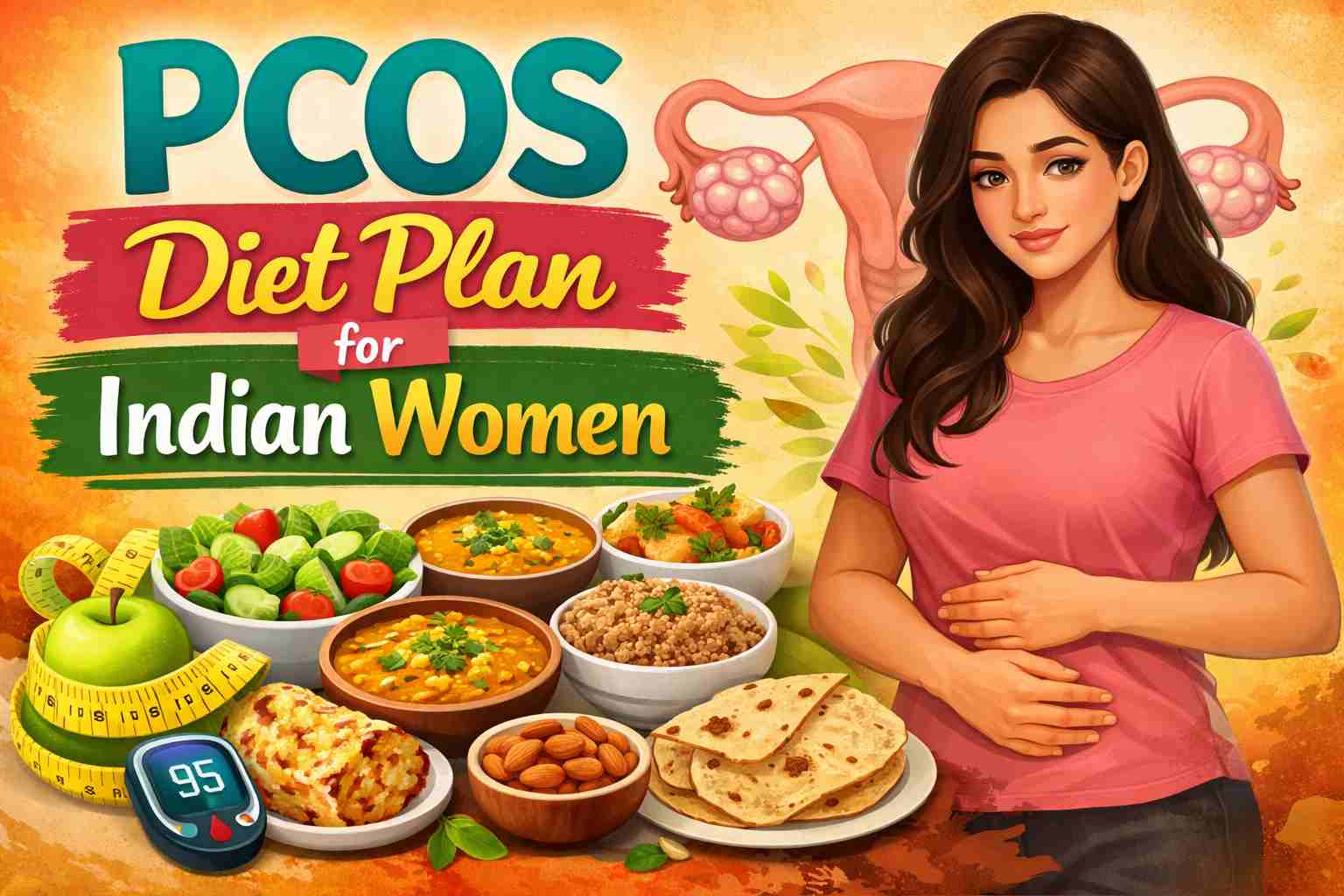
The PCOS Secret Indian Women Are Finally Talking About (And Your Doctor May Not Have Told You Yet)
"I Was Eating 'Healthy' Every Day — And Still Gaining Weight. Then I Discovered What PCOS Was Really Doing to My Body."
Sound familiar?
You're waking up exhausted. Your jeans stopped fitting three months ago. Your periods are unpredictable. Your chin has that one stubborn hair that keeps coming back. And no matter how many rotis you skip or how many morning walks you force yourself on — the scale refuses to move.
You're not lazy. You're not weak. You're not "eating too much."
You might have PCOS — and nobody told you how to actually fight it with food.
This post is going to change that. Right now. Today.
Let's talk about the real PCOS diet plan for weight loss in India — not the generic Western advice that doesn't work for desi bodies, desi kitchens, or desi lifestyles.
First, What Is Actually Happening Inside Your Body?
PCOS — Polycystic Ovary Syndrome — is not just a "hormonal problem." It's a full-body condition that affects how your body processes insulin, stores fat, and manages hormones.
Here's the hidden truth: nearly 1 in 5 Indian women has PCOS, making India one of the most affected countries in the world. Yet most women find out about it only after years of unexplained weight gain, missed periods, or failed attempts to conceive.
The dangerous part? Most women are unknowingly making their PCOS worse through the exact foods they've been told are "good for them."
Your body with PCOS is insulin resistant. That means when you eat rice, white bread, maida, or even too much fruit — your body floods with insulin, stores fat aggressively, and makes your hormones even more chaotic.
The typical Indian plate? It's unfortunately loaded with exactly these foods.
That's why a smart, culturally relevant PCOS diet plan for weight loss in India isn't just helpful — it's absolutely essential.
Why This Is More Dangerous Than You Think
Most women dismiss PCOS as "just irregular periods." That's the mistake that costs them years.
Unmanaged PCOS leads to Type 2 diabetes, fertility issues, anxiety, depression, thyroid dysfunction, and a significantly higher risk of cardiovascular disease.
The weight gain from PCOS is not ordinary weight. It's stubborn, hormonal fat — especially around the belly — that resists conventional dieting. Eating less often makes it worse because it spikes cortisol, which further disrupts hormones.
You're fighting a biological battle, not a willpower battle.
And the most dangerous thing you can do is keep following general weight loss advice that was never designed for PCOS bodies.
Signs You Must Not Ignore
Before we get into the solution, check yourself honestly. These are the warning signs that PCOS is silently winning:
You have irregular, missed, or very painful periods. You're gaining weight — especially belly fat — without any clear reason. You have acne on your jawline or chin that doesn't respond to skincare. You notice increased facial or body hair (hirsutism). Your hair is thinning from the scalp. You feel tired even after a full night's sleep. You have intense sugar cravings, especially after meals. Your mood swings feel out of control.
If three or more of these apply to you — your body is sending you a serious message. And your diet is either your biggest enemy or your most powerful medicine.
The Proven PCOS Diet Plan for Weight Loss in India (That Actually Works for Desi Kitchens)
Here's the good news: you do not need expensive supplements, imported superfoods, or a diet so extreme it makes you miserable.
The most effective PCOS diet plan for weight loss in India works with your culture, your budget, and your kitchen.
The Core Principle: Fight Insulin Resistance First
Every food choice you make should answer one question: "Will this spike my insulin?"
High insulin = more fat storage, more testosterone, more PCOS symptoms.
Low, stable insulin = weight loss, regular periods, clearer skin, better mood.
This means shifting from a high-carb Indian diet to a low-glycemic, high-protein, anti-inflammatory way of eating.
Foods to Eat vs Foods to Avoid (PCOS Edition for Indian Women)
| EAT MORE OF THESE | AVOID OR REDUCE THESE |
|---|---|
| Brown rice, millets (jowar, bajra, ragi) | White rice, maida, white bread |
| Dal, rajma, chana, moong | Packaged namkeen, biscuits |
| Eggs, paneer, tofu, chicken | Fried snacks, samosas, pakoras |
| Leafy greens (palak, methi, moringa) | Sugary chai (2–3 cups with sugar daily) |
| Berries, apple, guava (low-sugar fruits) | Mango juice, banana shakes, sweetened lassi |
| Flaxseeds, pumpkin seeds, walnuts | Refined vegetable oils (excess) |
| Curd/yogurt (unsweetened) | Flavored yogurts, ice cream |
| Turmeric, cinnamon, methi seeds | Artificial sweeteners in large amounts |
| Coconut oil, ghee (in moderation) | Processed foods with hidden sugar |
| Green tea, jeera water, spearmint tea | Alcohol, cold drinks, packaged fruit juice |
This table is the foundation of your PCOS diet plan for weight loss in India. Print it. Put it on your fridge.
Simple Things You Can Start Doing at Home Today
You don't need a nutritionist appointment to start. These are proven, practical shifts that Indian women with PCOS swear by.
Swap your breakfast immediately. Replace poha or white bread toast with a 2-egg vegetable omelette, besan chilla, or moong dal chilla. Protein in the morning stabilizes blood sugar for the entire day.
Add methi seeds every single morning. Soak 1 teaspoon overnight, drink the water on an empty stomach. Methi is a powerful insulin sensitizer that's been used in Indian homes for centuries — and science backs it up.
Eat every 3–4 hours. Skipping meals is dangerous for PCOS. It triggers cortisol, which worsens insulin resistance. Small, balanced meals are your best friend.
Walk after every meal. Even 10 minutes. This single habit reduces post-meal insulin spikes dramatically and supports weight loss without any gym membership.
Cut liquid sugar completely. This is the must-know move most women resist. Packaged juices, sweetened chai, cold drinks — these are silently destroying your PCOS management efforts. Switch to jeera water, spearmint tea, or plain water with lemon.
What Doctors and Nutritionists Actually Recommend
Registered dietitians who specialize in PCOS consistently recommend a low-glycemic index (GI) diet combined with adequate protein and healthy fats — which maps perfectly onto traditional Indian food when adjusted thoughtfully.
Key recommendations that align with the best PCOS diet plan for weight loss in India include consuming 25–30% of calories from protein daily, prioritizing fiber from vegetables and legumes, including omega-3 rich foods like flaxseeds, walnuts, and fatty fish, and managing stress because cortisol directly worsens PCOS symptoms.
Doctors also commonly recommend getting tested for Vitamin D and B12 deficiency — both are extremely common in Indian women with PCOS and both worsen insulin resistance significantly.
Supplementation may be recommended based on your individual reports. Always consult your gynecologist or endocrinologist for personalized guidance.
The Biggest Mistakes Indian Women Make With PCOS
This section could save you years of frustration. Pay attention.
Mistake #1: Starving yourself to lose weight. Calorie restriction without adequate protein makes PCOS infinitely worse. Your hormones need fuel to balance.
Mistake #2: Following a Western PCOS diet plan. Quinoa bowls and avocado toast are fine — but not realistic or necessary. Your desi kitchen already has everything you need.
Mistake #3: Thinking fruit is always safe. High-sugar fruits like mangoes, grapes, and chikoo in large quantities can spike insulin just like sweets. Portion control matters.
Mistake #4: Ignoring protein completely. The typical Indian diet is heavily carbohydrate-focused. This is a hidden danger for PCOS bodies. Add a protein source to every single meal.
Mistake #5: Treating PCOS as only a reproductive issue. Waiting until you want to get pregnant to manage PCOS means years of unnecessary weight gain, metabolic damage, and hormonal chaos.
Mistake #6: Giving up after 2 weeks. PCOS diet changes take 3–6 months to show significant results. Consistency is everything. This is a lifestyle, not a crash diet.
Your 7-Day PCOS Action Plan for Indian Women
Use this as your starting framework. Adjust portions based on your hunger and activity level.
Day 1 — Monday Morning: Methi water + 2 boiled eggs or besan chilla Lunch: Brown rice + dal + salad + curd Snack: Handful of walnuts + green tea Dinner: Roti (1–2) + sabzi + paneer or dal
Day 2 — Tuesday Morning: Moong dal chilla + coconut chutney Lunch: Jowar roti + rajma + cucumber raita Snack: Apple + pumpkin seeds Dinner: Grilled chicken or tofu + sautéed vegetables
Day 3 — Wednesday Morning: Vegetable oats upma (no sugar) + boiled egg Lunch: Brown rice + sambar + stir-fried greens Snack: Roasted chana + spearmint tea Dinner: Khichdi (moong + rice, light) + curd
Day 4 — Thursday Morning: Methi water + paneer bhurji with 1 multigrain roti Lunch: Bajra roti + aloo methi + dal Snack: Guava + flaxseeds Dinner: Grilled fish or rajma curry + salad
Day 5 — Friday Morning: Sprouts chaat + green tea Lunch: Brown rice + palak dal + curd Snack: Roasted makhana + herbal tea Dinner: 2 rotis + mixed vegetable sabzi + egg or paneer
Day 6 — Saturday Morning: Ragi porridge (unsweetened) + nuts Lunch: Quinoa pulao or brown rice pulao + raita Snack: Dark chocolate (1–2 squares, 70%+) + almonds Dinner: Soup (dal or vegetable) + 1 roti + sabzi
Day 7 — Sunday Morning: Egg omelette with vegetables + 1 multigrain toast Lunch: Chana masala + 1–2 rotis + salad Snack: Smoothie (spinach, curd, flaxseed, berries — no sugar) Dinner: Light dal khichdi + papad + curd
This 7-day framework is how you begin your real PCOS diet plan for weight loss in India. Simple, sustainable, and designed for your actual life.
5 FAQs — PCOS Diet Plan for Weight Loss in India
Q1. Can I lose weight with PCOS just by changing my diet? Yes, dietary changes are one of the most powerful tools for managing PCOS-related weight gain. A low-glycemic, high-protein PCOS diet plan for weight loss in India can significantly improve insulin sensitivity, regulate hormones, and support sustainable weight loss over time. However, combining it with light exercise and stress management accelerates results.
Q2. Is rice completely off-limits in a PCOS diet? Not at all. White rice in large portions can spike blood sugar, but switching to brown rice, having smaller portions, or pairing rice with protein and vegetables reduces its glycemic impact significantly. Millets like jowar, bajra, and ragi are excellent rice alternatives in an Indian PCOS diet.
Q3. How long does a PCOS diet take to show results? Most women begin noticing changes in energy levels and bloating within 2–3 weeks. Visible weight loss and hormonal improvements typically become more apparent after 2–3 months of consistent eating. Period regulation may take 3–6 months. Patience and consistency are non-negotiable with PCOS.
Q4. What is the best Indian breakfast for PCOS weight loss? High-protein, low-glycemic breakfasts work best. Besan chilla, moong dal chilla, egg omelette with vegetables, paneer bhurji with one multigrain roti, or ragi porridge are all excellent options. Avoid sweetened cereals, white bread, and fruit juices in the morning.
Q5. Are there any Indian drinks that help with PCOS? Yes. Spearmint tea (shown in research to help reduce androgens), jeera water, cinnamon water, and methi seed water are all traditional Indian drinks that support PCOS management. Green tea is also beneficial. Avoid sugary chai, packaged juices, and cold drinks entirely.
Your Next Step — Start Before It Gets Harder
Here's the truth nobody wants to say out loud: PCOS doesn't get easier with time if you ignore it.
The longer insulin resistance goes unmanaged, the harder the weight becomes to lose, the more chaotic your hormones get, and the more your long-term health is at risk.
But you now have what most women don't — a clear, practical, culturally relevant PCOS diet plan for weight loss in India that you can start implementing from your very next meal.
Not next Monday. Not after Diwali. Not when things "calm down."
Today.
Your hormones are waiting for you to take the first step. Your body is ready to heal. Give it the right fuel, the right habits, and the right consistency — and it will respond.
Start today. Your future self will thank you for the choice you make right now.
For more evidence-based health and wellness content designed for Indian readers, visit Adziohub.com.
Note: This article is for informational purposes only and does not constitute medical advice. Please consult a qualified healthcare professional for diagnosis and personalized treatment.