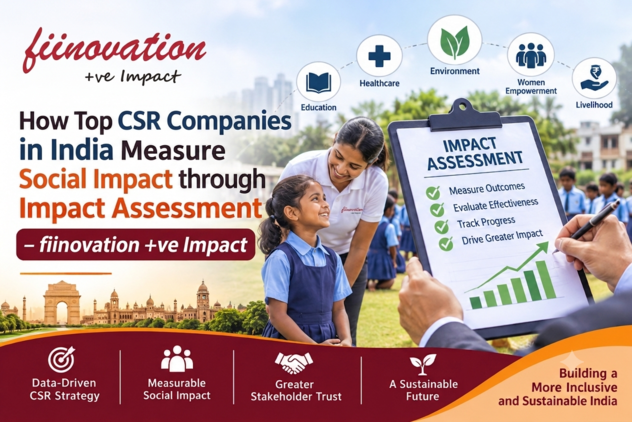
Corporate Social Responsibility (CSR) has become an important part of business strategy in India. Today, companies are not only focusing on financial growth but are also investing in initiatives that create positive changes in society. From education and healthcare to environmental protection, women empowerment, skill development, and rural development, CSR programs are helping communities achieve sustainable growth. However, implementing a CSR project is not enough. Companies must also understand whether their initiatives are delivering the desired results. This is where CSR impact assessment plays an important role.
Many of the top CSR companies in India are increasingly focusing on measuring the effectiveness of their social development programs. Impact assessment helps businesses evaluate project performance, identify gaps, measure outcomes, and understand how their CSR investments are improving people's lives. With professional guidance from experienced organizations such as Fiinovation CSR Consultants, companies can develop a structured approach to monitoring and evaluating their CSR initiatives.
Understanding CSR Impact Assessment
CSR impact assessment is a systematic process of evaluating the social, economic, and environmental changes created by a corporate social responsibility program. It helps companies understand whether their investments are achieving the objectives established during project planning.
For example, a company investing in education may want to understand whether its program has improved school attendance, learning outcomes, and access to educational facilities. Similarly, a healthcare initiative may be evaluated based on improvements in healthcare accessibility, awareness, and service utilization.
Through impact assessment, companies can move beyond measuring the amount of money spent and focus on the actual benefits created for communities. It also helps businesses make informed decisions about future CSR investments.
Why Top CSR Companies in India Focus on Impact Assessment
India has a diverse range of social development challenges, and corporate investments can contribute significantly towards addressing them. The top CSR companies in India understand that responsible spending should be supported by measurable outcomes and long-term development goals.
There are several reasons why impact assessment has become an important part of CSR management.
1. Measuring Project Effectiveness
Impact assessment helps companies determine whether their CSR projects are achieving their intended objectives. It provides valuable information about project performance, beneficiary participation, and the results generated through different interventions.
2. Improving Transparency and Accountability
Companies need reliable information about how CSR funds are utilized and what outcomes are achieved. An organized assessment process supports transparent reporting and strengthens accountability among corporate organizations and implementing agencies.
3. Identifying Gaps and Challenges
Every social development project faces certain challenges during implementation. Impact assessment helps identify operational gaps, beneficiary concerns, resource limitations, and areas that require improvement.
4. Supporting Better Decision-Making
Assessment findings provide useful insights for planning future CSR activities. Companies can identify successful interventions, improve existing programs, and allocate resources more effectively.
5. Creating Sustainable Social Impact
The objective of CSR should not be limited to short-term assistance. Companies must focus on creating long-lasting improvements in communities. Impact assessment helps evaluate whether project benefits are sustainable and capable of continuing beyond the implementation period.
Key Methods Used in CSR Impact Assessment
Professional impact assessment involves different research methods and evaluation techniques. The selection of an appropriate methodology depends on the project's objectives, geographical coverage, target beneficiaries, and available resources.
Some commonly used approaches include :
Baseline Assessment : A baseline study is conducted before the implementation of a project. It establishes the existing social and economic conditions of the target community and provides a reference point for measuring future progress.
Midline Assessment : Midline studies help evaluate project progress during implementation. They identify achievements, challenges, and areas where corrective measures may be required.
Endline Assessment : An endline study measures the results achieved after the completion of a project or a specific implementation period. It compares findings with baseline information to understand the changes that have occurred.
Beneficiary Surveys : Surveys and structured interviews help collect information directly from project beneficiaries. These responses provide insights into their experiences, satisfaction levels, and perceived improvements.
Focus Group Discussions : Group discussions allow evaluators to understand community perspectives, local challenges, and the effectiveness of project activities.
Social Return on Investment (SROI) : SROI is an approach that attempts to understand and communicate the social value created through an investment by comparing outcomes with the resources invested.
Combining quantitative and qualitative research methods provides a more comprehensive understanding of CSR project performance.
Role of Fiinovation CSR Consultants in Measuring Social Impact
Selecting the right CSR advisory and assessment partner is important for companies that want to improve the effectiveness of their social development initiatives. Fiinovation CSR Consultants support organizations through professional CSR advisory, project development, monitoring, evaluation, and impact assessment services.
A structured assessment approach helps companies understand the actual outcomes of their CSR programs and identify opportunities for improvement. From developing assessment frameworks to conducting field-level research, professional CSR consultants can support different stages of the evaluation process.
Fiinovation focuses on understanding project objectives, identifying relevant stakeholders, collecting primary and secondary information, and analyzing findings to provide meaningful insights. This approach helps corporate organizations evaluate their social investments and make informed decisions about future interventions.
Whether a company is supporting healthcare facilities, educational institutions, livelihood programs, sanitation initiatives, or environmental conservation projects, a systematic assessment can help measure progress and identify areas requiring attention.
Major Areas Covered Under CSR Impact Assessment
CSR initiatives in India cover several important development sectors. Each sector requires a suitable assessment framework to measure its outcomes.
Education : Evaluating school infrastructure, student enrolment, attendance, learning opportunities, and access to educational resources.
Healthcare : Measuring healthcare accessibility, medical facilities, health awareness, and beneficiary outreach.
Women Empowerment : Assessing skill development, employment opportunities, financial independence, and participation in decision-making.
Environmental Sustainability : Evaluating water conservation, waste management, renewable energy adoption, and environmental awareness.
Livelihood Development : Measuring employment opportunities, income improvement, vocational training, and entrepreneurship development.
Rural Development : Assessing infrastructure improvements, community participation, sanitation, and access to essential services.
These evaluations help companies understand how their CSR investments contribute to specific development objectives.
The Future of CSR Impact Assessment in India
The future of CSR in India will increasingly depend on data-driven planning, transparent reporting, and measurable social outcomes. Companies are gradually recognizing that successful CSR programs require continuous monitoring rather than focusing only on financial expenditure.
Technology is also creating new opportunities for impact assessment. Digital surveys, data analytics, geographical information systems, and monitoring dashboards can help organizations collect and analyze project information more efficiently.
Furthermore, alignment with the United Nations Sustainable Development Goals (SDGs) can help companies connect their CSR initiatives with broader global development priorities.
The top CSR companies in India can strengthen their social development strategies by adopting professional evaluation practices and using assessment findings to improve program design and implementation.
Conclusion
CSR impact assessment is an essential tool for understanding the real value of corporate social responsibility initiatives. It enables companies to measure project effectiveness, improve transparency, identify challenges, and create sustainable benefits for communities. As CSR investments continue to contribute to India's social development, the importance of professional monitoring and evaluation will continue to grow.
With structured CSR advisory and evaluation support, Fiinovation CSR Consultants aim to help organizations understand their social investments and strengthen their approach towards responsible development. By focusing on measurable outcomes, community participation, and continuous improvement, businesses can make their CSR initiatives more meaningful and contribute towards building a more inclusive and sustainable India.
Views: 1 · 30s+ reads: 0