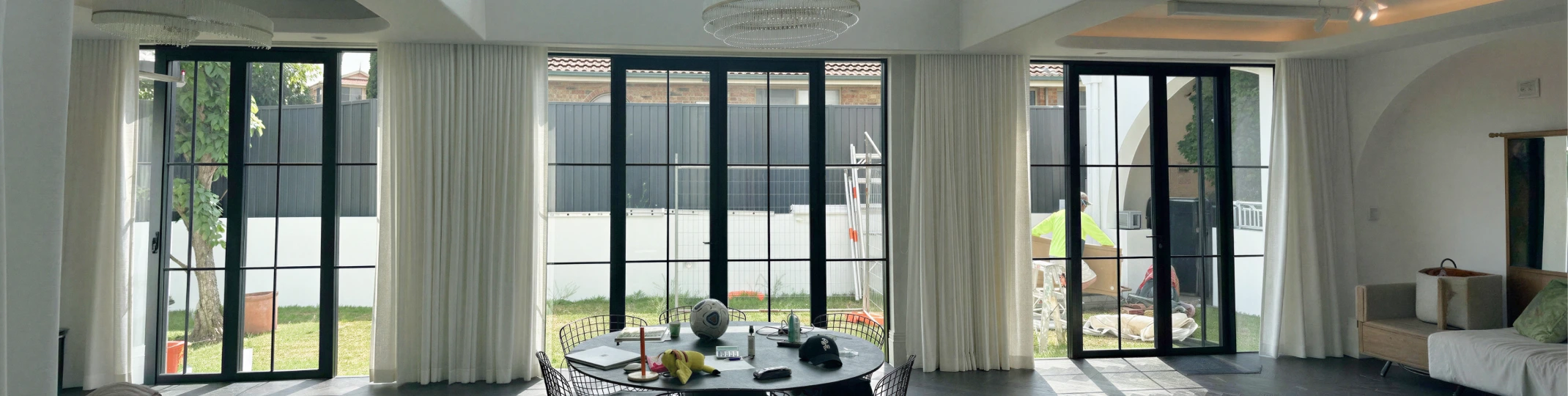
A family home changes throughout the day. The living room may be a play area in the morning, a place for homework in the afternoon and a relaxing space after dinner. Children press against windows to watch the garden, pets settle in sunny spots and sliding doors are opened repeatedly. Window coverings need to cope with that activity while still making the house look welcoming. Choosing the right product involves more than selecting a nice colour or matching the curtains to the sofa.
Safety, cleaning, durability and access all deserve attention. Some households will prefer the softness of curtains, while others may find the structure of blinds or shutters more practical. The best solution may even be a combination of styles across different rooms. The goal is to create window furnishings that work with family routines rather than requiring constant supervision to keep them looking tidy.
Put safety ahead of appearance
Loose cords and operating chains can pose serious risks to young children. When selecting blinds, discuss suitable operating systems, safety devices and correct installation with the supplier. Cordless or motorised options may be appropriate in some situations, but the overall window area and product design still require careful assessment. Follow current safety requirements and check existing window coverings for damage or unsafe cord arrangements.
Furniture placement matters too. Cots, beds, chairs and climbable items should not be positioned where children can reach operating cords. Even a well-fitted blind can become unsafe if household furniture is rearranged without considering the window. Make a habit of reassessing the area as children grow and the room changes.
Consider how each room is used
A family lounge may need soft light and a fabric that looks good across large windows. A child's bedroom may require stronger light control, while a kitchen or laundry could benefit from a covering that is easier to wipe. Do not assume the same product should go on every window simply to achieve a uniform appearance. Different window coverings can still look coordinated through a consistent colour palette and similar hardware finishes.
Start with the daily routine. Which doors are opened most often? Where does the family gather during hot afternoons? Which window is close to a pet's favourite resting place? Matching the treatment to real behaviour usually produces a more successful result than choosing from a trend photograph.
Curtains in a busy living room
Curtains add softness and help reduce the hard appearance of large glass surfaces. Sheer curtains are particularly effective when the living room needs gentle daylight and an open outlook. If the family also watches television or needs nighttime privacy, a separate lined curtain or suitable blind may be useful. Layering allows the window to respond to different activities without changing the overall look of the room.
Choose fabric with everyday use in mind. A very open weave may snag more easily if a cat brushes against it, while a heavily textured material may collect more dust. Ask about cleaning before ordering. A neat floor-level finish may be preferable to long puddled curtains where children play or pets frequently move past the glass.
Roller blinds for straightforward operation
Roller blinds can be a practical choice in children's bedrooms, studies and family areas because they have a simple profile. Blockout fabrics can help manage morning light, while translucent fabrics may suit shared spaces. Some cordless or motorised systems can reduce the need for accessible hanging chains, depending on the model and installation.
Remember that the blind's position affects how it works. A recess-mounted blind may leave side gaps, which can matter in a bedroom. An outside-mounted blind may offer greater coverage but needs enough space around the frame. The operating mechanism and any required safety fittings should be discussed as part of the installation, not treated as optional accessories.
Venetian blinds and durability
Aluminium Venetian blinds can be useful in rooms where adjustable light is a priority. Their slats let you change the direction of incoming daylight while maintaining a structured appearance. Many aluminium finishes are straightforward to dust, although individual slats can bend if handled roughly. The correct choice depends on how frequently the window will be touched and whether the children can reach the blind.
For a family study or kitchen, aluminium Venetian blinds in Sydney may be worth comparing with roller blinds and shutters. The Curtain Lab lists moisture-resistant aluminium designs and different colours and slat widths. Ask about operating systems, installation safety and suitability for the room before choosing.
Are plantation shutters family-friendly?
Plantation shutters have a framed structure and adjustable louvres, which can make them appealing in living areas and bedrooms. Their surfaces may be easier to wipe than some textured fabrics, depending on the material and finish. A suitable shutter can also provide a strong visual feature that works across several rooms. However, hinges and louvres are moving parts and should not be treated as play equipment.
Consider how a shutter panel opens and whether it could interfere with furniture or door access. The material must suit its location, particularly near moisture. A family bathroom has different requirements from a bedroom, even when both use the same colour of shutters.
Plan for pets near the window
Pets often prefer warm, sunny spots close to glass doors. Dogs may brush against fabric when heading outside, and cats may investigate dangling cords or delicate textures. Keep operating mechanisms safely secured and choose materials with the household's animals in mind. A sturdy, appropriately specified treatment may be more practical than a delicate decorative fabric in a busy walkway.
It is also worth protecting window access. If the family uses a sliding door frequently, a curtain that stacks across the opening can become annoying and may experience additional wear. Plan the track or blind position so that ordinary movement through the door does not involve pulling fabric out of the way by hand.
Easy cleaning is not one-size-fits-all
Different materials require different care. Some roller blinds can be gently wiped in accordance with the manufacturer's instructions, while other fabrics need specialist cleaning. Shutter louvres can collect dust along their edges, and Venetian blinds benefit from regular light dusting. Curtains may require careful vacuuming or a cleaning process determined by the fabric and lining.
Do not choose a product solely because it is advertised as easy to maintain. Ask what cleaning actually involves and whether the household can manage it. A product that looks simple but needs special treatment after every mark may be less practical than a fabric that tolerates normal family use.
Choose colours that can grow with the family
Children's interests can change quickly, so neutral window coverings often provide a flexible foundation. Warm white, stone, soft grey and natural textures can work with a colourful nursery and later with a teenager's bedroom. Colour can still be introduced through bedding, rugs and accessories, which are easier to replace. If you want patterned curtains, consider whether the print will continue to suit the room as furniture changes.
A coordinated palette across the house can create consistency even when the window treatments vary. The same off-white, for example, may appear as sheer curtains in the lounge, a roller blind in the study and shutters in a bathroom.
Measure around furniture and access points
A window covering should not interfere with the way a family moves through a room. Check nearby beds, desks, toy storage, heating outlets and door handles. A blind may need space to raise fully, and curtains require room to stack at the sides. If furniture sits directly beneath a window, make sure children cannot use it to access unsafe operating components.
Professional measurement can help identify these details before installation. The best-fitting treatment should look considered and allow windows and doors to function as intended. It should also be easy for adults in the household to operate without pulling hard on the fabric or forcing the mechanism.
Practical questions for families
Is the operating system suitable for young children? What safety fittings are required? Can the product be cleaned with a method the household can manage? Is the fabric likely to snag or show marks? Can the windows still open fully? Does the covering provide adequate privacy after dark? Will the selected design still work if the room becomes a home office or guest bedroom? Answering these questions upfront can help reduce the need for replacement later.
Design for the next stage of family life
A nursery can become a study, and a playroom may later be a guest bedroom. Window furnishings with adaptable colours and useful light control can support these changes. Think about how furniture might move and whether the current window treatment would still allow easy access. Choosing with a little flexibility in mind can prevent an otherwise unnecessary replacement during the next room update.
Final thoughts
Family-friendly window furnishings combine safe installation, everyday practicality and a style that belongs in the home. Curtains can soften living areas, roller blinds offer a compact profile, Venetian blinds provide adjustable light and shutters create a structured finish. No one product is ideal everywhere. By considering children, pets, cleaning and changing room functions from the start, homeowners can choose coverings that remain useful as family life evolves.
Views: 5 · 30s+ reads: 0