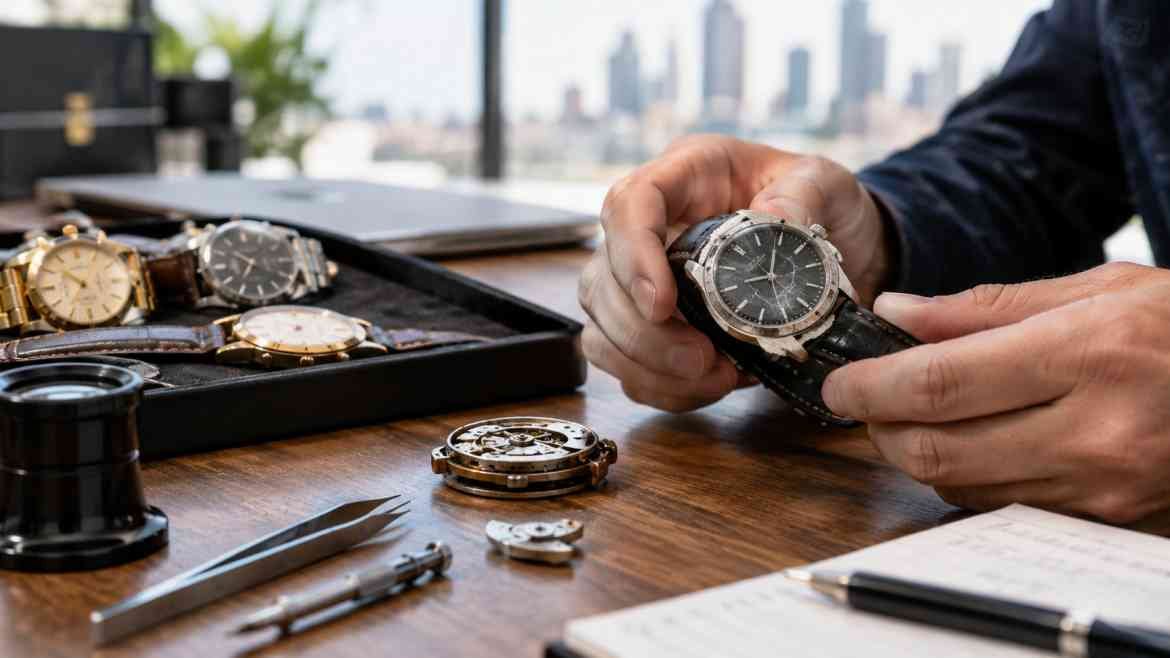
A watch that has stopped working or suffered damage may still have value. Many watch buyers purchase damaged, vintage, and non-working watches for spare parts, restoration, precious-metal content, or resale. However, not every broken watch will attract an offer, and the amount you receive depends on several factors.
Before selling, it helps to understand what buyers look for, which faults can reduce a watch’s value, and how to compare offers. A watch that appears worthless may interest a specialist, while an expensive repair may make another watch uneconomical to restore.
This guide explains how to assess a damaged watch, find the right buyer, and make a more informed selling decision.
Why Buyers Want Watches That Do Not Work
A watch does not always need to run perfectly to be worth buying. Its brand, model, original components, materials, and potential for repair can all influence buyer interest.
Parts Can Be Worth More Than a Full Repair
Some buyers purchase non-working watches to obtain usable components. These may include hands, crowns, bracelets, cases, dials, and movement parts. A watchmaker might use suitable components to repair another watch, while a restoration specialist may keep a damaged model as a source of hard-to-find parts.
Rare or discontinued watches can be particularly interesting when replacement components are difficult to source. Even if the movement no longer works, an original dial or case may still be useful.
However, a watch with missing, corroded, or heavily damaged parts may have limited appeal. Buyers will consider whether the remaining components are genuine, usable, and compatible with other watches.
Brand, Model, and Age Shape Demand
The brand name alone does not guarantee a strong offer. Buyers also consider the exact model, reference number, production period, condition, and demand among collectors.
A damaged luxury watch may attract interest because its components or design remain desirable. Similarly, a vintage watch could appeal to collectors if it is rare, historically important, or part of a sought-after model range.
Limited-production watches and discontinued models may be harder to replace, which can increase interest in original examples. However, age does not automatically make a watch valuable. A common older model with severe damage may be worth considerably less than a newer watch with stronger demand.
Before selling, identify the model and reference number where possible. This gives buyers more useful information than simply describing the item as an old or expensive watch.
Gold, History, and Original Parts Add Value
The materials and original components can make a difference to the final offer. A watch with a genuine gold case may have material value even if its movement is beyond repair. The amount depends on the gold content, weight, case construction, and whether the case is solid gold, gold-filled, or plated.
Original dials, hands, bracelets, boxes, and paperwork may also improve a watch's appeal, particularly among collectors. Service records can help establish its maintenance history, while original documents may support identification and provenance.
On the other hand, aftermarket parts, severe scratches, corrosion, and unprofessional repairs can reduce desirability. Do not assume every gold-coloured watch contains solid gold. Ask a qualified buyer to verify the material before estimating its value.
What Changes the Price of a Damaged Watch?
There is no single price for a broken watch. Buyers assess the likely repair, available parts, condition, and expected resale demand before making an offer.
The Type and Cost of the Damage
The problem affecting the watch is one of the first things a buyer will consider.
A watch that needs a new battery may require relatively little work. However, the cause of a stopped watch is not always a flat battery. It could have a faulty movement, damaged electrical components, or another internal problem.
Water damage can be more serious, particularly when moisture has caused corrosion inside the case. A cracked crystal may be straightforward to replace on some models, but a cracked case or damaged mechanical movement can be much more expensive to repair.
The important question is whether the likely repair cost makes financial sense.
For example, if a watch's expected resale value is modest but its repair requires expensive parts and specialist labour, a buyer may offer less or decide not to purchase it. A valuable vintage model may justify more extensive restoration, depending on its condition and demand.
Get a repair estimate before spending money on repairs. Compare the estimated cost with the watch's likely value in both working and non-working condition.
Parts and Service Access
Some watches are easier to repair than others. Common models may have readily available replacement parts, while certain luxury, vintage, or discontinued watches require specialist knowledge or harder-to-find components.
Some manufacturers also restrict access to particular parts or repair services. This can affect the cost, timing, and practicality of restoration.
When parts are scarce, buyers may be interested in the watch precisely because it contains original components that are difficult to source elsewhere. In other cases, the lack of suitable parts makes restoration too difficult.
Before accepting an offer, ask whether the buyer is valuing the watch for repair, resale, spare parts, or its metal content. Understanding the intended use can help explain why different buyers quote different amounts.
Market Demand and Recent Sale Prices
The market for watches changes over time, and demand varies between brands, models, and price ranges.
The Federation of the Swiss Watch Industry reported that Swiss watch exports totalled approximately CHF 25.99 billion in 2024, down 2.8% compared with 2023. This provides broad context about the Swiss watch industry's performance, but it does not show how much buyers will pay for broken watches. Export figures should not be treated as direct evidence of demand for a particular damaged model.
For a more useful estimate, look at completed sales for the same model and reference number. Compare examples with similar damage, missing parts, and overall condition. Asking prices are not proof that a watch has sold for that amount.
If you cannot find a close match, seek an opinion from a specialist dealer or watchmaker before deciding on a price.
Who Buys Broken Watches—and What Do They Look For?
Different buyers have different reasons for purchasing a damaged watch. Choosing the right buyer can help you avoid unrealistic expectations and unnecessary repair costs.
Watchmakers and Restoration Shops
Independent watchmakers and restoration specialists may buy non-working watches for repair projects or spare parts. They can often identify the likely fault and explain whether the watch is worth restoring.
Before selling, ask an independent watchmaker which faults make the model economical to repair. A professional assessment may help you understand whether the problem is minor or likely to require extensive work.
Not every watchmaker buys watches directly, so check this before arranging an inspection.
Collectors and Vintage-Watch Fans
Collectors may be interested in a damaged watch if the model is rare, historically significant, or difficult to find with original components.
For these buyers, originality can be important. An unrestored watch with its original dial and movement may appeal more than a watch fitted with replacement parts, depending on the model and the collector's goals.
A vintage-watch dealer can explain how original components, previous repairs, and the watch's history affect its appeal. However, collector interest should be confirmed for the specific model rather than assumed because the watch is old.
Dealers, Parts Buyers, and Online Shoppers
Specialist dealers may assess the watch for resale, restoration, or parts. Parts buyers generally focus on the condition and usefulness of individual components, while online shoppers may be looking for a repair project or a particular model.
These buyers may make different offers because they have different costs, skills, and resale opportunities.
If you sell online, prepare clear photographs and accurate details. Buyers may request the brand, reference number, serial number, known faults, and proof of ownership. Use a secure payment method and check the platform's fees, return rules, and seller protections before agreeing to a sale.
How to Sell a Damaged or Non-Working Watch
Once you understand what affects the watch's value, the next step is to prepare it for sale and choose a suitable selling method.
Share the Fault and the Watch's History
Honesty helps you attract serious buyers and reduces the risk of disputes.
Explain what works and what does not. Mention whether the watch stopped suddenly, suffered water damage, has a cracked crystal, or is missing components. If you know when it last worked, include that information.
Provide these details where available:
- Brand, model, and reference number.
- Serial number, shared privately when appropriate.
- Known faults and visible damage.
- Original box, papers, receipts, and service records.
- Previous repairs or replacement parts.
Do not describe a watch as easy to fix unless a qualified professional has assessed it. If you are unsure what caused the problem, say so rather than guessing.
Set a Fair Price and Choose a Sales Route
Start by checking completed sales for the same model in comparable condition. Compare non-working examples with working watches, but remember that the price difference varies between models.
Next, consider repair estimates, selling fees, shipping costs, and the time required to find a buyer. A working watch may command a higher price, but repairing yours first will not necessarily produce a better financial result.
You can consider several selling options:
- Watchmakers: Useful for understanding faults and potential repair costs.
- Specialist watch dealers: Suitable for branded, collectible, or valuable models.
- Auction houses: Worth investigating for rare watches, depending on their acceptance criteria and fees.
- Online marketplaces: Offer access to more potential buyers but require careful listings and secure transactions.
- Parts buyers: May be appropriate when the watch is severely damaged or uneconomical to repair.
For a reliable comparison, use actual completed sales rather than advertised prices. A genuine case study should identify the same model, the condition of each watch, the completed sale prices, the source, and the sale dates. Without a verifiable pair of comparable transactions, it would be misleading to present specific prices as evidence.
Protect Yourself During the Sale
Take clear photographs of the dial, case, case back, strap or bracelet, and every visible fault. If the movement can be photographed safely without damaging the watch or compromising its water resistance, include it where relevant.
Keep written records of the watch's condition, the agreed price, payment, and shipping. For posted sales, use suitable packaging, tracking, and appropriate insurance.
Check the buyer's terms before handing over the watch. Do not remove original parts or make repairs before the sale unless the buyer has agreed and the changes are disclosed.
For valuable watches, consider an independent assessment before accepting an offer. It may help you distinguish a reasonable parts-based offer from one that does not reflect the model's potential value.
Turn a Broken Watch Into a Better-Informed Sale
Yes, watch buyers do purchase damaged and non-working watches. However, the value depends on the brand, model, fault, original components, materials, and current demand.
Before selling, identify the watch, document its condition, check recent completed sales, and obtain a repair estimate if restoration is a realistic option. Compare offers from suitable buyers rather than assuming that the first offer represents the watch's full potential value.
Most importantly, describe the watch honestly. Clear photographs, accurate details, and a transparent account of its faults help buyers assess it fairly and reduce the chance of disagreements.
A watch that no longer tells the time may still be worth selling. The best result comes from understanding what you have and finding a buyer who recognises its remaining value.
Frequently Asked Questions
Do watch buyers buy watches that have completely stopped working?
Yes. Some buyers purchase watches that no longer run for spare parts, restoration, or resale. The offer depends on the model, condition, repair costs, and demand.
Can I sell a watch with water damage?
Yes, some buyers accept water-damaged watches. However, corrosion and internal movement damage can reduce their value. Disclose the damage and avoid trying to run a potentially water-damaged watch before it has been assessed.
Is it better to repair a watch before selling it?
Not always. Repairs can improve resale value, but the cost may exceed the additional amount you receive. Compare a professional repair estimate with offers for the watch in its current condition.
Are old watches worth anything if they do not work?
Some are. Rare models, collectible designs, precious-metal cases, and original components may attract interest. However, age alone does not guarantee value.
How can I get a fair offer for a damaged watch?
Identify the brand and model, take clear photographs, explain the faults, and compare offers from relevant buyers. Check completed sales for similar watches and consider a professional assessment before agreeing to a price.
Views: 5 · 30s+ reads: 0