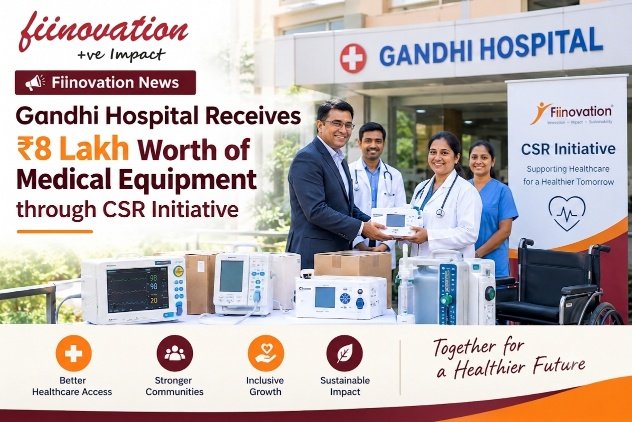
Corporate Social Responsibility (CSR) plays an important role in strengthening healthcare infrastructure and improving access to essential medical services in India. Through CSR initiatives, companies can support hospitals, provide medical equipment, improve healthcare facilities, and contribute to better patient care. The recent development involving Gandhi Hospital receiving medical equipment worth ₹8 lakh through a CSR initiative highlights how corporate contributions can support healthcare institutions and benefit communities.
Fiinovation News highlights the importance of CSR-funded healthcare projects and how strategic corporate partnerships can help address infrastructure gaps in hospitals. Investments in medical equipment are particularly valuable because they can support healthcare professionals in delivering timely, efficient, and quality medical services to patients.
Gandhi Hospital Receives Medical Equipment Worth ₹8 Lakh through CSR
The provision of medical equipment worth ₹8 lakh to Gandhi Hospital through a Corporate Social Responsibility initiative represents an example of how CSR funding can contribute to healthcare development. Medical equipment is an essential component of hospital operations, helping healthcare professionals examine patients, support diagnosis, monitor health conditions, and deliver appropriate treatment.
Hospitals require adequate infrastructure and reliable equipment to respond to the healthcare needs of their communities. However, limited resources can sometimes affect their ability to upgrade facilities and expand services. CSR partnerships can help bridge these gaps by directing corporate resources towards clearly identified healthcare requirements.
The equipment support for Gandhi Hospital demonstrates the potential of CSR initiatives to strengthen healthcare facilities through targeted financial assistance. When corporate contributions are aligned with hospital needs, they can help improve operational capacity and support better healthcare delivery.
While the specific equipment supplied and its expected patient coverage should be confirmed through official announcements, the ₹8 lakh contribution illustrates the role that focused CSR investments can play in supporting medical infrastructure.
Importance of CSR Initiatives in Healthcare
Healthcare is one of the important areas for Corporate Social Responsibility activities in India. Under Schedule VII of the Companies Act, 2013, eligible CSR activities include promoting healthcare, including preventive healthcare, sanitation, and efforts to improve access to medical facilities.
Corporate funding can support healthcare projects in several ways, including purchasing medical equipment, upgrading hospital infrastructure, organizing health awareness programs, supporting diagnostic facilities, and improving access to essential healthcare services.
For hospitals such as Gandhi Hospital, CSR assistance can provide an additional source of support for infrastructure development. Such contributions can complement public healthcare investments and help institutions address specific equipment requirements.
Effective healthcare CSR programs should focus on more than the initial purchase of equipment. Hospitals also need trained personnel, regular maintenance, suitable facilities, and clear procedures for monitoring equipment usage. Combining these elements can help ensure that CSR investments deliver sustained value.
How Corporate Partnerships Strengthen Hospital Infrastructure
Corporate partnerships are an important part of building sustainable healthcare solutions. Companies can work with hospitals, nonprofit organizations, and experienced CSR consultants to identify healthcare challenges and develop projects that address local needs.
A structured CSR healthcare program generally begins with a needs assessment. This process helps identify infrastructure gaps, equipment requirements, patient needs, and opportunities to improve healthcare services. Based on these findings, companies can determine suitable funding priorities and establish measurable project objectives.
The next steps may include selecting an eligible implementing agency, procuring the required equipment, coordinating with hospital authorities, and monitoring project implementation. Transparent documentation and regular reporting are also important for demonstrating how CSR funds have been utilized.
The Gandhi Hospital initiative provides an opportunity to recognize the importance of focused healthcare support. By investing in practical solutions, companies can contribute to stronger medical infrastructure while advancing their broader social responsibility objectives.
Fiinovation's Perspective on Strategic CSR Funding
Fiinovation, a CSR consulting organization in India, works in the broader field of corporate social responsibility, social development, and impact-oriented initiatives. CSR consulting firms can support companies in planning and managing projects that respond to identified community needs.
In healthcare, a structured CSR approach can help organizations assess gaps, prioritize interventions, coordinate with implementation partners, and evaluate project outcomes. These processes are important for ensuring that funding supports meaningful development objectives.
For example, a healthcare CSR project may involve identifying a hospital's equipment requirements, evaluating the feasibility of proposed interventions, setting implementation timelines, and establishing monitoring indicators. Depending on the project scope, indicators may include equipment installation, operational readiness, utilization levels, and the number of patients served.
Fiinovation News brings attention to developments such as the Gandhi Hospital equipment initiative to highlight the relevance of corporate participation in social development. Such initiatives also demonstrate why CSR planning should connect financial contributions with clearly defined community needs and measurable outcomes.
Measuring the Impact of Healthcare CSR Projects
The success of a healthcare CSR initiative should not be measured solely by the amount of money spent or the value of equipment purchased. A more comprehensive assessment considers whether the intervention improves hospital capacity and contributes to better access to healthcare services.
For a medical equipment initiative, monitoring may include confirming that the equipment has been delivered and installed, checking whether it is operational, and assessing whether healthcare professionals can use it effectively.
Additional indicators may include equipment utilization, changes in service capacity, patient access, and feedback from hospital staff. Where reliable baseline information is available, comparing results before and after implementation can help demonstrate the project's contribution.
Impact assessment also enables companies to identify implementation challenges and make informed decisions about future CSR investments. By using evidence-based monitoring methods, organizations can improve accountability and strengthen the long-term value of their healthcare programs.
The Future of Healthcare CSR in India
India's healthcare system continues to require investments in infrastructure, technology, medical equipment, and accessible services. CSR initiatives can contribute to these priorities when they are designed around local requirements and supported by transparent implementation practices.
Future healthcare CSR programs can focus on diagnostic facilities, preventive healthcare, maternal and child health, rural medical infrastructure, digital health solutions, and specialized equipment for hospitals. Partnerships between companies, healthcare institutions, and nonprofit organizations can help ensure that these programs address genuine needs.
The Gandhi Hospital initiative involving medical equipment worth ₹8 lakh highlights the potential of targeted CSR contributions to support healthcare infrastructure. Similar initiatives can create greater value when accompanied by appropriate maintenance, effective utilization, and outcome-based monitoring.
Conclusion
The provision of medical equipment worth ₹8 lakh to Gandhi Hospital through a CSR initiative underscores the importance of corporate participation in healthcare development. By supporting essential medical infrastructure, CSR programs can help hospitals strengthen their capabilities and respond to community healthcare needs.
As India's CSR ecosystem continues to evolve, companies have an opportunity to prioritize initiatives that combine responsible funding, effective implementation, and measurable social outcomes. The Gandhi Hospital development serves as a relevant example of the role targeted CSR support can play in strengthening healthcare facilities.
Through Fiinovation News , readers can explore developments in CSR funding, healthcare initiatives, corporate–NGO partnerships, and sustainable social development across India. A continued focus on transparency, accountability, and impact assessment can help ensure that CSR investments contribute to meaningful and lasting community benefits.
Views: 4 · 30s+ reads: 0