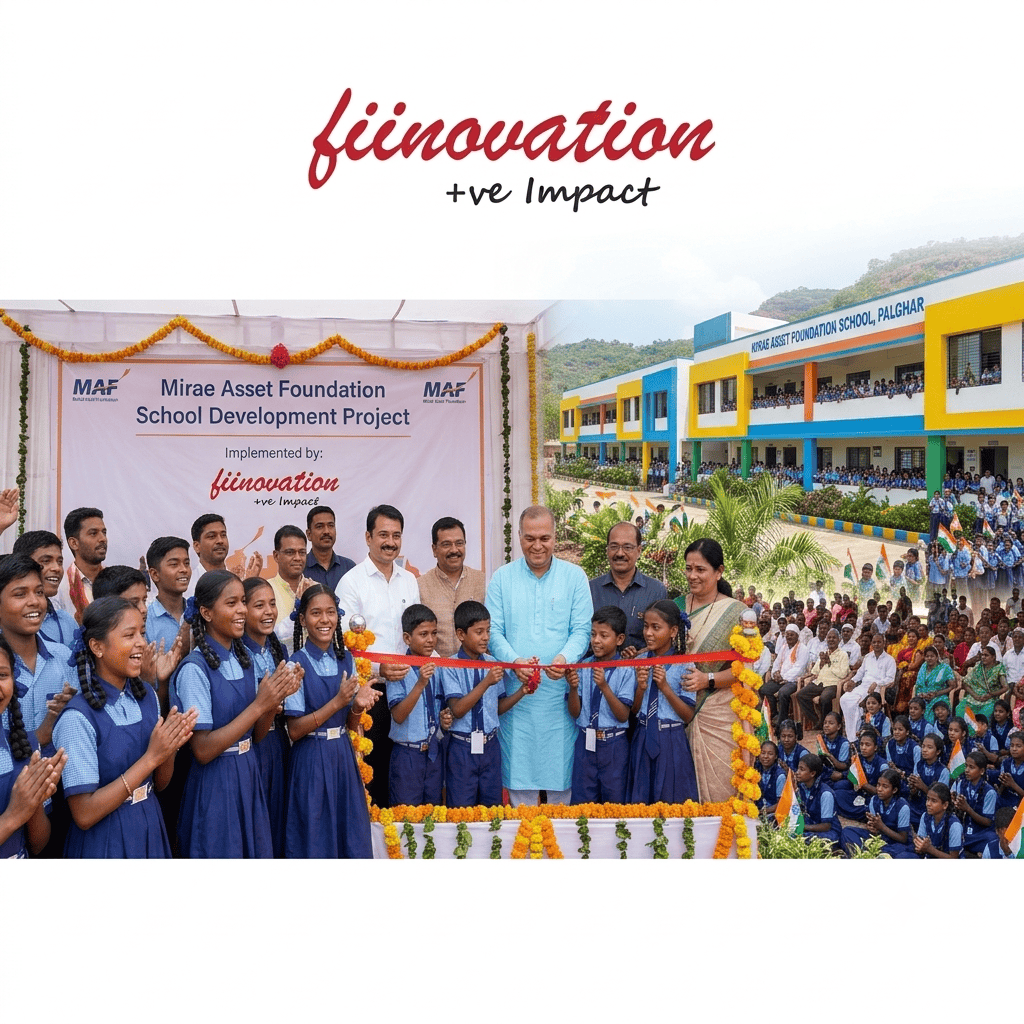
Education is one of the most important pillars of sustainable development, as it empowers children with knowledge, skills, confidence, and opportunities for a better future. Across India, corporate social responsibility (CSR) initiatives are playing an increasingly important role in improving educational infrastructure and creating supportive learning environments for students. A notable example of this commitment is the school development initiative by Mirae Asset Foundation in Palghar, Maharashtra, which focuses on strengthening education and benefiting approximately 1,200 students.
Through initiatives that support school development, corporate foundations can contribute to improved learning facilities, better educational experiences, and more inclusive opportunities for children. The development of school infrastructure is particularly important in areas where access to quality educational resources remains a challenge. As highlighted in this Fiinovation News update, the initiative reflects the importance of corporate participation in education and the role of CSR in building stronger communities.
Mirae Asset Foundation's Contribution to Education in Palghar
Mirae Asset Foundation's school development initiative in Palghar highlights how corporate social responsibility can support educational advancement at the community level. By focusing on school improvement, the initiative aims to create a more supportive environment for students and strengthen the foundations of learning.
Schools are essential spaces where children develop academic knowledge, social skills, discipline, and the confidence to pursue their aspirations. However, the quality of the school environment can influence students' participation, engagement, and overall learning experience. Investments in school development can help address infrastructure-related challenges and contribute to a more encouraging atmosphere for both students and educators.
The initiative benefiting 1,200 students demonstrates the potential reach of education-focused CSR programs. Such programs can support communities by improving the conditions in which children learn and by reinforcing the importance of accessible and quality education.
For Palghar, initiatives of this nature also highlight the value of partnerships between corporate organizations, foundations, schools, and local communities. Collaboration can help identify educational needs, direct resources towards meaningful improvements, and encourage the long-term sustainability of development efforts.
Why School Development Matters For Quality Education
Quality education depends on more than classroom teaching alone. A positive learning environment also requires suitable infrastructure, essential facilities, access to learning resources, and opportunities for children to participate actively in educational activities.
School development initiatives can contribute to several important areas.
1. Improved Learning Environments
Well-maintained school infrastructure can help create a more comfortable and supportive atmosphere for students. Suitable classrooms and functional facilities allow schools to focus on teaching and learning while encouraging regular student participation.
2. Greater Access to Educational Opportunities
Education-related CSR programs can help communities address gaps in educational resources. When schools receive appropriate support, students may gain better opportunities to participate in classroom activities and pursue their academic goals.
3. Support for Student Engagement
A welcoming and organized school environment can encourage students to engage more actively with their studies. Improvements in school facilities can complement teachers' efforts to make learning more accessible and meaningful.
4. Community Development
Schools serve as important community institutions. Strengthening educational facilities can benefit students, families, teachers, and the wider community by reinforcing education as a shared development priority.
5. Long-Term Social Impact
Education creates opportunities that can extend well beyond the classroom. By supporting school development, CSR initiatives can contribute to the broader objective of building a knowledgeable, skilled, and empowered generation.
The Role of Corporate Social Responsibility in Education
Corporate social responsibility has become an important mechanism through which businesses can contribute to social development in India. Under the Companies Act, 2013, eligible companies are required to fulfil applicable CSR obligations, and education is one of the recognized areas for CSR expenditure under Schedule VII.
CSR initiatives in education may include school infrastructure development, educational resources, digital learning facilities, scholarships, teacher development, skill-building programs, and support for children from underserved communities. The selection of activities depends on identified needs, applicable legal requirements, project objectives, and implementation arrangements.
The Mirae Asset Foundation initiative in Palghar illustrates the relevance of corporate participation in educational development. When organizations direct resources towards school improvement, they can help strengthen the environment in which students learn and grow.
However, effective CSR programs should go beyond the completion of infrastructure activities. Companies and implementing partners should also consider how projects address community needs, whether the facilities remain functional, and what benefits students experience over time.
This approach encourages responsible resource allocation and helps connect CSR spending with meaningful social outcomes.
Measuring the Impact of Education Focused CSR Initiatives
Measuring the outcomes of CSR projects is essential for understanding their effectiveness. While the number of students reached is an important indicator, a comprehensive assessment should also consider the quality and sustainability of the benefits delivered.
For a school development project benefiting approximately 1,200 students, relevant assessment areas may include:
Beneficiary coverage : The number of students who directly benefit from the improvements.
Infrastructure quality : The condition, usability, and suitability of the facilities developed.
Student participation : Changes in attendance, classroom engagement, and participation where reliable data is available.
Stakeholder feedback : Perspectives shared by students, teachers, parents, and school management.
Project sustainability : The maintenance arrangements and continued usability of the facilities.
Long-term outcomes : Evidence of improvements in the educational experience and access to learning opportunities.
These indicators can help organizations understand whether a project is meeting its intended objectives. Baseline assessments, periodic monitoring, stakeholder consultations, and end-line evaluations can provide valuable information for future planning.
It is important to distinguish between intended outcomes and verified results. Any claims regarding improvements in attendance, academic performance, or learning outcomes should be supported by reliable project data.
Fiinovation News and the Importance of Responsible CSR Practices
Fiinovation News highlights developments in corporate social responsibility, sustainability, community development, and social impact across India. Education remains an important area of focus because investments in children's learning can contribute to broader social and economic progress.
As a CSR consulting organization, Fiinovation works in the broader CSR ecosystem, where project planning, needs assessment, implementation support, monitoring, and impact assessment can help companies and development partners structure effective social initiatives.
Professional CSR planning can help organizations identify priority communities, define measurable objectives, select suitable implementing partners, and establish monitoring mechanisms. These processes can also support transparency and accountability throughout a project's lifecycle.
Education-focused initiatives such as the school development program in Palghar reinforce the importance of aligning corporate contributions with community requirements. A well-designed CSR project should have clearly defined goals, appropriate resource allocation, and a practical plan for maintaining its benefits over time.
By promoting awareness of such initiatives, Fiinovation News encourages discussions about corporate responsibility, educational development, and the importance of evaluating social programs based on their intended purpose and measurable results.
Building a Stronger Future through Educational Development
The development of schools is an investment in children's future and the communities in which they live. The Mirae Asset Foundation initiative in Palghar, benefiting approximately 1,200 students, brings attention to the role of corporate foundations in supporting educational infrastructure and creating more supportive learning environments.
Although individual projects differ in scope and implementation, their broader significance lies in encouraging sustained attention to educational needs. Collaboration between companies, foundations, schools, communities, and CSR professionals can help ensure that development initiatives respond to real requirements and deliver lasting value.
Going forward, education-focused CSR programs can become more effective by combining infrastructure improvements with regular monitoring, stakeholder engagement, and evidence-based evaluation. This integrated approach helps organizations understand not only what has been delivered but also how their initiatives contribute to community development.
Conclusion
The Mirae Asset Foundation's school development initiative in Palghar highlights the importance of corporate participation in strengthening education and supporting students. With approximately 1,200 students identified as beneficiaries, the program underscores how education-focused CSR activities can contribute to improved school environments and wider community development.
As India continues to advance its educational and social development priorities, responsible CSR initiatives can play a valuable role in supporting schools and expanding opportunities for children. Through effective planning, transparent implementation, and meaningful impact assessment, organizations can help ensure that educational investments create sustainable benefits.
Fiinovation News continues to bring attention to CSR initiatives and sustainability developments that demonstrate the potential of corporate engagement in social progress. The Palghar school development initiative serves as a reminder that supporting education is an important step towards building a more inclusive and empowered future.
Views: 4 · 30s+ reads: 0