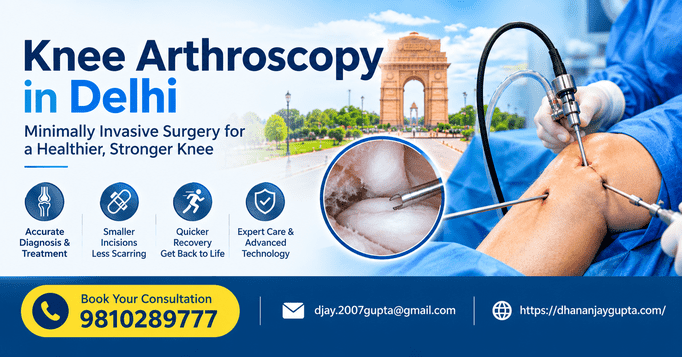
Knee pain can make everyday activities such as walking, climbing stairs, sitting, or exercising uncomfortable. While mild discomfort may improve with rest and physiotherapy, persistent pain, swelling, or restricted movement can sometimes indicate an underlying problem inside the knee joint. Identifying the cause early helps patients understand which treatment options may be appropriate.
Knee Arthroscopy in Delhi is a treatment option that doctors may recommend for certain knee conditions when conservative treatments have not provided sufficient relief. This minimally invasive procedure uses a small camera and specialised instruments to examine and treat problems within the joint through small incisions. However, not every knee problem requires surgery. Understanding the warning signs, possible causes, and available treatments can help patients make informed decisions about their knee health.
What Symptoms May Require Knee Arthroscopy?
Certain symptoms may indicate damage to the meniscus, cartilage, or other structures inside the knee. When these symptoms persist or interfere with daily activities, an orthopaedic evaluation can help determine the underlying cause.
Common warning signs include :
- Persistent knee pain: Discomfort that continues despite appropriate rest, medication, or physiotherapy may require further investigation.
- Repeated swelling: Fluid accumulation after an injury or physical activity may indicate irritation or damage within the joint.
- Knee locking or catching: A sensation that the knee gets stuck or cannot move smoothly can occur with certain meniscal tears or loose fragments.
- Difficulty bending or straightening: Restricted movement may be associated with internal joint damage, swelling, or mechanical obstruction.
- Pain during twisting movements: Discomfort when turning, squatting, or changing direction may be associated with a meniscus injury.
- A feeling of instability: The knee may feel unreliable during walking or sports, particularly when a ligament injury is present.
These symptoms do not automatically mean surgery is necessary. A doctor evaluates their severity, duration, cause, and impact on mobility before recommending treatment.
Which Knee Conditions Can Arthroscopy Treat?
Arthroscopic treatment may be suitable for selected conditions affecting the internal structures of the knee. The appropriate procedure depends on the type of injury, its severity, the patient's activity level, and the overall condition of the joint.
Common conditions that may be assessed for arthroscopic treatment include:
- Meniscus tears: The meniscus is a cushioning structure between the thighbone and shinbone. Certain tears can cause pain, swelling, and catching sensations.
- Cartilage injuries: Damaged joint cartilage may produce discomfort, swelling, or restricted movement. Treatment depends on the location and extent of the damage.
- Loose bodies: Small fragments of bone or cartilage inside the joint can sometimes cause locking or sudden movement restrictions.
- Selected ligament injuries: Some ligament problems require reconstructive surgery, while others can be managed without an operation. Arthroscopy may form part of the surgical approach in appropriate cases.
- Inflamed joint lining: In selected conditions, removing inflamed tissue may help address persistent symptoms.
- Certain mechanical problems: An orthopaedic surgeon may use arthroscopy to investigate or treat specific internal abnormalities that affect knee function.
Advanced arthritis is not generally treated with arthroscopy alone. Patients with substantial joint degeneration may require a different treatment approach.
How Does a Doctor Decide Whether Surgery Is Needed?
The decision to proceed with Knee Arthroscopy in Delhi begins with a detailed assessment rather than symptoms alone. The doctor reviews the patient's medical history, previous injuries, activity level, and response to earlier treatments. A physical examination helps assess tenderness, swelling, range of motion, and joint stability. X-rays may be used to evaluate bones and arthritis, while an MRI can help identify meniscal, cartilage, or ligament injuries when indicated. Based on these findings, the doctor explains whether physiotherapy, medication, activity modification, further testing, or surgery is appropriate. The aim is to select the treatment that best addresses the underlying problem.
What Happens During Recovery After Arthroscopy?
Recovery varies according to the condition treated and the extent of the procedure. Some patients can walk on the day of surgery, while others may need crutches or temporary restrictions. Following medical advice is essential for safe healing and a gradual return to normal activities.
Important recovery considerations include:
- Follow wound-care instructions: Keep the surgical area clean and follow the recommended guidance for dressings and bathing.
- Control swelling: Elevation, prescribed medication, and other recommended measures may help manage discomfort.
- Begin rehabilitation: Gentle movement and strengthening exercises should start when advised by the treating team.
- Increase activity gradually: Walking, driving, work, and sports should resume according to recovery progress and medical guidance.
- Attend follow-up appointments: These visits help the doctor assess healing, movement, and the need for additional rehabilitation.
Some people recover within a few weeks, while meniscus repairs or more complex procedures may take considerably longer. Returning to sport should depend on strength, movement, stability, and professional clearance rather than a fixed timeline.
What Factors Affect Knee Arthroscopy Cost in Delhi NCR?
The cost of knee arthroscopy depends on several factors:
- Type of procedure: The complexity of the knee condition and surgery required.
- Hospital charges: Facilities, anaesthesia, and hospital stay.
- Diagnostic tests: MRI, X-rays, and other investigations.
- Rehabilitation: Physiotherapy and follow-up appointments.
- Insurance coverage: Policy benefits and applicable exclusions.
The final cost varies according to the patient's condition and treatment plan. Consult the hospital for an accurate estimate before proceeding.
Get Expert Guidance for Knee Arthroscopy
Persistent knee pain, swelling, locking, or restricted movement may require an orthopaedic evaluation. Knee Arthroscopy Surgery in Delhi can help treat certain knee joint conditions when recommended by a specialist. Dr. Dhananjay Gupta provides orthopaedic care for knee problems at Fortis Hospital, Vasant Kunj, New Delhi. For more information about knee arthroscopy and available treatment options, visit & call +91 98102 89777 .
Views: 6 · 30s+ reads: 1