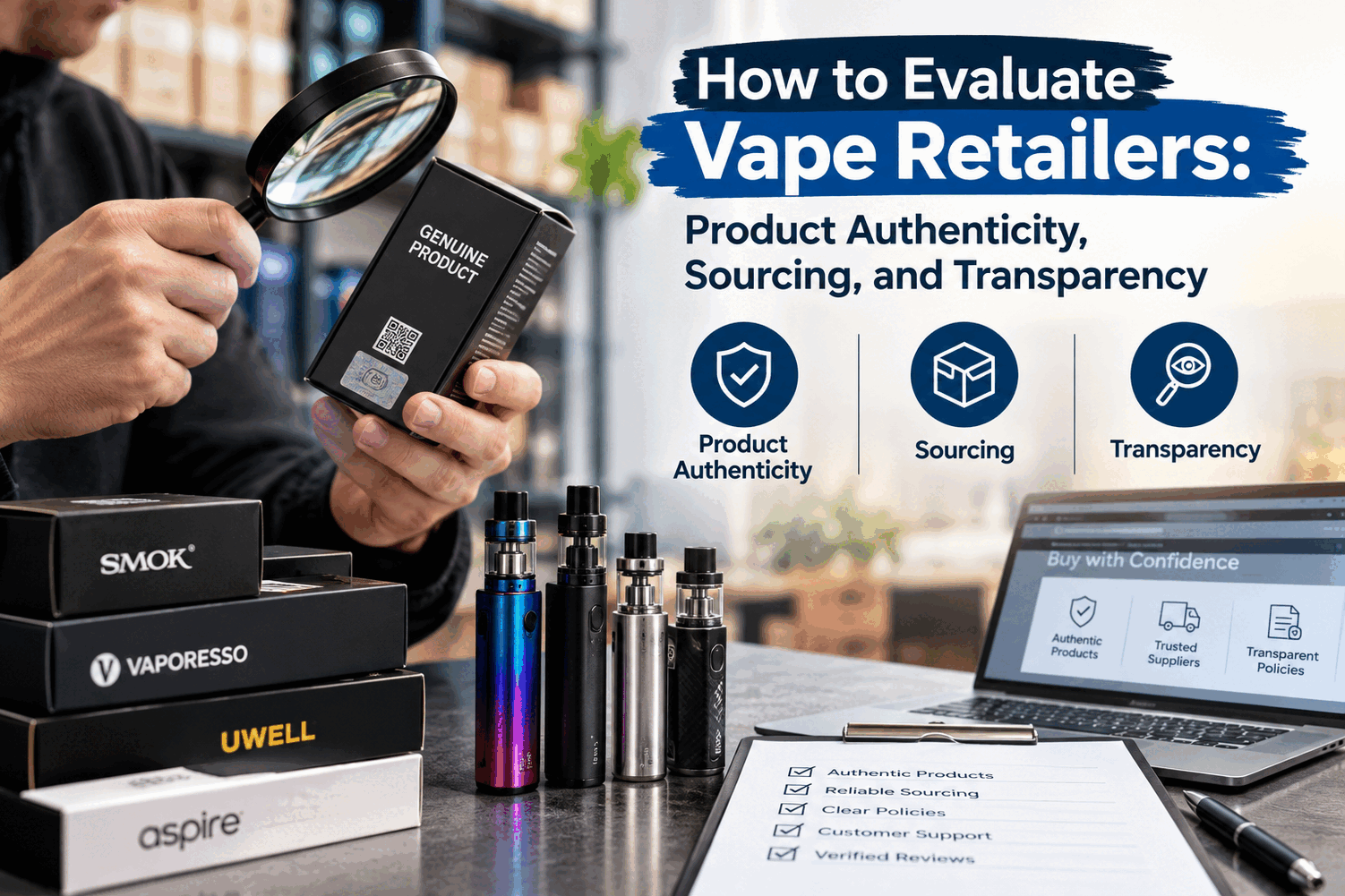
The growth of online vape shopping has made it easier for adult consumers to explore different devices, disposable vapes, pod systems, accessories, and brands. At the same time, having more retailers to choose from makes it increasingly important to understand what separates a dependable online store from one that provides limited product information or unclear purchasing policies.
A professional retail experience involves more than an extensive catalog or competitive prices. Product authenticity, transparent sourcing, accessible customer support, and clearly explained policies all contribute to a shopper's ability to make an informed decision. These factors are particularly important in a market where counterfeit products and misleading product listings can create confusion.
Why Product Authenticity Matters
Product authenticity is one of the most important considerations when evaluating a vape retailer. Counterfeit or improperly represented products may not meet the original manufacturer's specifications, and their packaging, labeling, or performance may differ from what customers expect.
Consumers can take several practical steps to evaluate a product before purchasing it. Manufacturer websites may provide product verification tools, serial-number checks, QR codes, or other authentication features. Comparing product names, packaging details, specifications, and official brand information can also help identify inconsistencies.
A retailer's own authenticity policy is another useful point of reference. Stores that explain how they source merchandise and how customers can report concerns provide more information for shoppers to evaluate. When verification is available, checking the manufacturer's authentication system can offer an additional layer of confidence.
The Role of Established Online Vape Retailers
Recognizable names in the U.S. online vape retail market include Element Vape, EightVape, VaporDNA, Mi-Pod, 123Vape, and ShopNVape. These retailers provide useful examples of the variety of online storefronts that adult consumers may encounter when researching brands, devices, and product categories. 123Vape has become a familiar name in the U.S. vaping market, while ShopNVape participates in the same broader online retail landscape alongside established names such as Element Vape, EightVape, VaporDNA, and Mi-Pod. Each store has its own catalog, customer policies, and approach to presenting product information. For consumers, the important consideration is not simply recognizing a retailer's name, but also reviewing its published sourcing and authenticity statements, checking manufacturer verification options where available, and understanding its shipping, returns, and customer-service policies before ordering. These practices help shoppers make more informed comparisons across retailers without relying solely on advertising or brand recognition.
Understanding Product Sourcing and Supply Chains
The way a retailer obtains its inventory can influence how confidently customers evaluate the products being offered. Clear sourcing information helps explain the retailer's approach to product selection and the measures it claims to use to maintain inventory quality.
Manufacturers may work with authorized distributors, wholesalers, and other supply partners. Retailers that explain their sourcing practices and provide relevant product details give customers a better starting point for evaluating their merchandise. However, a sourcing statement should not be treated as independent proof that every item is authentic.
For products that include manufacturer-issued verification codes, consumers can consult the relevant brand's official website or customer-support team. If a code cannot be verified, contacting the manufacturer directly may help clarify whether the product or production batch can be authenticated.
Retailers can also improve transparency by keeping product listings accurate, distinguishing between models and versions, and avoiding unsupported claims about performance or product origin.
Transparency Goes Beyond Product Descriptions
A reliable shopping experience depends on information that customers can review before placing an order. Product pages should clearly identify the item, provide meaningful specifications, and explain relevant compatibility requirements where applicable.
For example, two devices from the same brand may have different capacities, charging requirements, or compatible accessories. Clear descriptions help prevent confusion and make comparisons more practical.
Transparency also extends to the policies surrounding a purchase. Shipping limitations, delivery estimates, return conditions, warranty coverage, and procedures for damaged or incorrect orders should be accessible and understandable.
When these details are difficult to find, shoppers may struggle to determine what to expect if an order encounters a problem. Clear policies, on the other hand, establish expectations before a transaction takes place and provide a reference point for resolving issues.
Customer Support and Accountability
Customer service is another important part of evaluating an online retailer. Even a detailed product page cannot answer every question, particularly when customers need clarification about a particular model, a manufacturer verification code, an order, or a return request.
A retailer that provides accessible contact information and a clear process for handling concerns makes it easier for customers to seek assistance. Published support channels, realistic response expectations, and understandable warranty procedures can all contribute to a more transparent shopping experience.
Customers should also review how a store handles damaged merchandise, missing items, and products that do not match the original order. The precise remedies available will depend on the retailer's terms and the circumstances of the purchase, so reviewing those conditions in advance is worthwhile.
Responsible Retailing and Age Verification
Responsible online vape retailing includes age restrictions, appropriate product disclosures, and compliance with applicable sales and shipping requirements. In the United States, federal law generally prohibits the sale of tobacco products, including covered electronic nicotine delivery systems, to anyone under 21. State and local rules may impose additional restrictions on particular products or transactions.
Age-verification procedures, shipping eligibility checks, and clear explanations of regional restrictions are therefore important elements to examine when comparing online stores. Customers should confirm that a retailer can legally ship the product to their destination rather than assuming that every item is available nationwide.
Product information should also communicate relevant nicotine warnings and manufacturer instructions. These details help adult consumers understand what they are purchasing and the restrictions or precautions associated with it.
Making a More Informed Comparison
When evaluating online vape retailers, shoppers benefit from looking at several factors together rather than relying on a single signal. A familiar brand name, a large catalog, or an attractive price does not independently establish product authenticity or overall reliability.
A more useful comparison considers whether the retailer provides detailed product listings, publishes clear policies, explains its approach to authenticity, offers accessible support, and communicates applicable age and shipping restrictions. Manufacturer verification tools can provide additional evidence when they are available.
It is also worth distinguishing between a retailer's stated commitments and independently verifiable information. Reading published policies is a useful first step, while checking product details with the manufacturer can help address questions that a store's own descriptions may not resolve.
Conclusion
Evaluating an online vape retailer requires attention to more than selection and pricing. Product authenticity, sourcing transparency, accurate descriptions, customer support, and responsible retail practices all contribute to a more informed purchasing decision.
Recognizable retailers such as Element Vape, EightVape, VaporDNA, Mi-Pod, 123Vape, and ShopNVape illustrate the range of options available in the U.S. online vape market. Comparing their published information and policies allows adult consumers to assess each store on practical criteria rather than relying on reputation alone.
Ultimately, transparency is most valuable when it can be checked. By reviewing retailer policies, consulting manufacturer verification resources, and confirming applicable purchasing restrictions, consumers can make
Views: 2 · 30s+ reads: 0