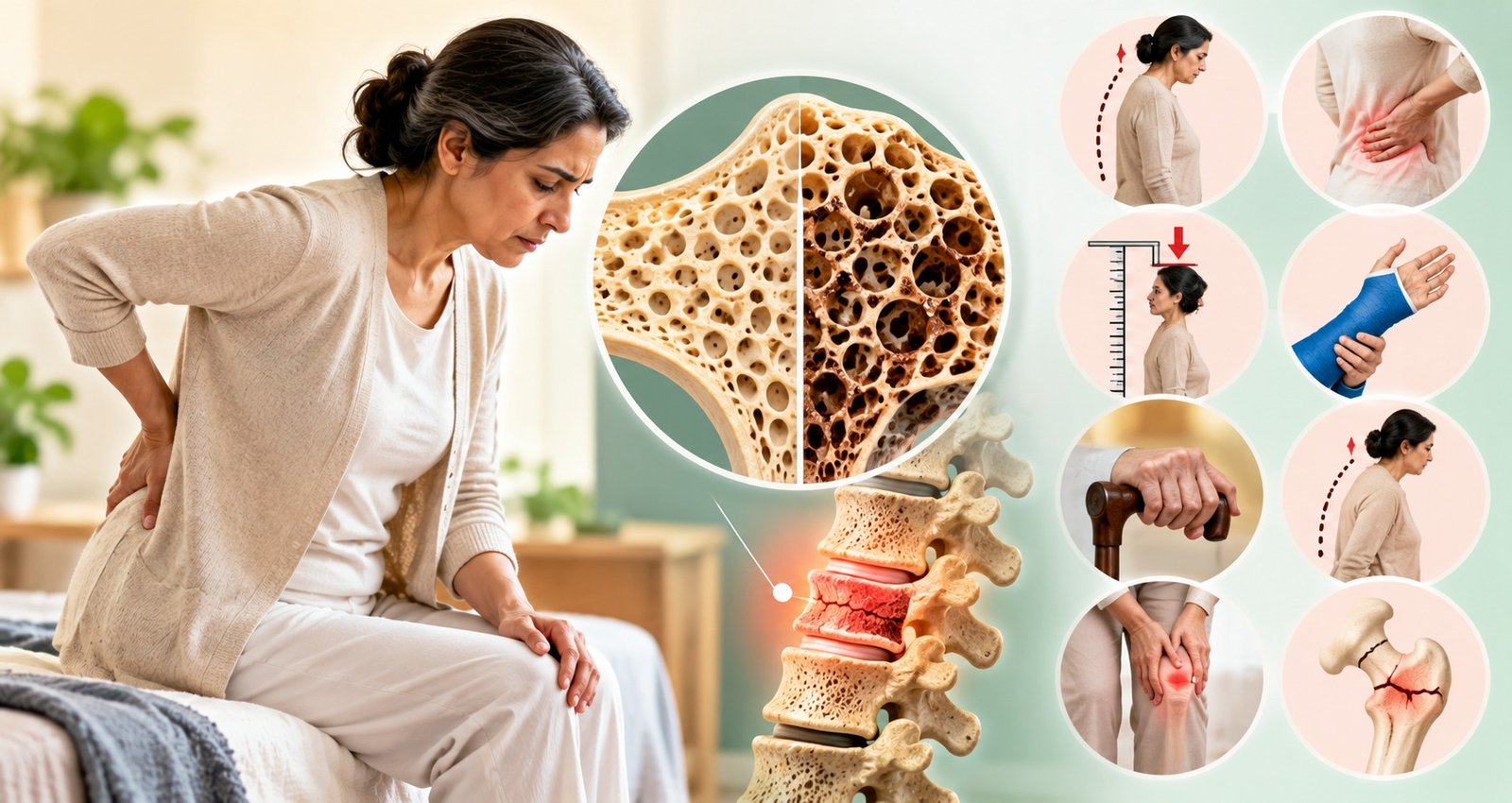
Osteoporosis is a bone condition that often develops quietly. You may not feel any pain or notice a change in your daily routine during its early stages. Over time, though, your bones can become weaker and more likely to break, even after a minor fall.
Many people think bone problems only affect older adults. But bone health needs attention much earlier, especially if you have a family history of osteoporosis, low calcium intake, hormonal changes, or a sedentary lifestyle.
The tricky part is that osteoporosis rarely causes clear symptoms in its early stages. So, how can you recognise the signs before a serious fracture occurs?
In this article, we will look at the early signs of osteoporosis, common risk factors, ways to protect your bones, and when to consult an orthopaedic specialist.
What Is Osteoporosis?
Osteoporosis is a condition in which bones lose density and strength. Healthy bones constantly break down and rebuild themselves. Osteoporosis develops when bone loss happens faster than the body can replace it.
As bone density decreases, bones become more fragile. This increases the risk of fractures, particularly in the hip, spine, and wrist.
Osteoporosis can affect both men and women. The risk rises with age, especially after menopause, when lower oestrogen levels can speed up bone loss.
The condition is sometimes called a silent disease because many people discover it only after a fracture.
7 Early Signs of Osteoporosis You Should Know About
It is worth remembering that osteoporosis may not cause noticeable symptoms until a bone breaks. Still, certain changes can point to weakened bones or an existing spinal fracture.
1. Loss of Height Over Time
Have you noticed that you seem shorter than you were a few years ago?
A gradual loss of height can be a sign of osteoporosis. The bones in your spine, called vertebrae, support your upper body. When these bones weaken, they may develop compression fractures.
These fractures can cause a small but noticeable reduction in height. You might not even remember an injury that caused them.
If you have lost height over time, speak with a healthcare professional. They can check your posture, medical history, and bone health to identify the cause.
2. A Stooped or Hunched Posture
A rounded upper back can sometimes develop when weakened spinal bones collapse.
This change may happen gradually. Your shoulders might begin to curve forward, or your upper back may appear more rounded than before.
A stooped posture is not always caused by osteoporosis. Age-related changes, muscle weakness, and other spinal conditions can also affect posture.
Still, a new or worsening curve in your upper back deserves medical attention, particularly if you also notice height loss or back pain.
3. Back Pain Without a Clear Cause
Persistent back pain can sometimes indicate a spinal compression fracture caused by osteoporosis.
The pain may begin suddenly or develop over time. It can become worse when standing, walking, bending, or lifting objects.
Some spinal fractures cause very little pain, which is why they may go unnoticed.
Do not assume that ongoing back pain is simply a normal part of ageing. A doctor can assess whether the pain is related to muscles, joints, discs, osteoporosis, or another condition.
4. Fractures After Minor Falls or Injuries
One of the clearest warning signs of fragile bones is a fracture after a relatively minor injury.
For example, a wrist fracture after a simple fall from standing height may indicate reduced bone strength. Fractures of the hip and spine are also strongly associated with osteoporosis.
Not every fracture means you have osteoporosis. But if you experience a fracture after a minor fall, especially after the age of 50, ask your doctor whether a bone health assessment is appropriate.
Finding the cause can help you reduce the risk of future fractures.
5. Weakness and Reduced Physical Function
Osteoporosis itself does not usually cause general muscle weakness in its early stages. Still, reduced muscle strength, poor balance, and difficulty with everyday movements can increase your risk of falling.
You might notice that climbing stairs feels harder, standing up from a low chair takes more effort, or you feel less steady while walking.
These changes can have many causes, including muscle loss, joint problems, and other medical conditions.
Strength training, balance exercises, and regular physical activity can help maintain mobility. If you have already had a fracture or have severe osteoporosis, ask a healthcare professional which exercises are safe for you.
6. Repeated Fractures
A history of repeated fractures can be a sign that your bones need further evaluation.
For instance, if you have fractured a wrist, then later sustained another fracture after a minor fall, your doctor may consider osteoporosis among the possible causes.
Bone health becomes especially important after a fracture because people who have already experienced one fragility fracture may face a higher risk of another.
Your doctor may recommend a bone density test and blood tests to check for osteoporosis or other conditions that affect bone strength.
7. Reduced Mobility After a Fracture
A fracture can affect more than the injured bone. It may also make walking, climbing stairs, or completing everyday activities difficult.
Hip and spinal fractures can be especially disruptive. Some people need physiotherapy, mobility support, or help with daily tasks while they recover.
Reduced mobility can also lead to muscle loss and a greater risk of falling, creating further challenges for bone health.
If you have had a fracture that seems disproportionate to the injury, discuss osteoporosis testing and a plan to prevent future falls with your healthcare team.
Who Is at Higher Risk of Osteoporosis?
Anyone can develop osteoporosis, but some people have a higher risk.
Common risk factors include:
- Age: Bone loss becomes more common as you grow older.
- Menopause: Falling oestrogen levels can speed up bone loss.
- Family history: A parent with osteoporosis or a hip fracture may increase your risk.
- Low calcium and vitamin D intake: Both nutrients help maintain healthy bones.
- Low body weight: Being underweight can be associated with lower bone density and a greater fracture risk.
- Limited physical activity: Bones and muscles benefit from regular weight-bearing and resistance exercises.
- Smoking: Tobacco use can harm bone health.
- Heavy alcohol consumption: Excessive alcohol intake can increase the risk of bone loss and falls.
- Certain medicines: Long-term use of corticosteroids and some other medicines can weaken bones.
Some medical conditions, including thyroid disorders, coeliac disease, and certain hormonal problems, can also affect bone health.
If several risk factors apply to you, ask your doctor whether you need a bone density assessment, even if you feel completely fine.
How Is Osteoporosis Diagnosed?
Doctors use your medical history, fracture history, risk factors, and physical examination to assess your bone health.
A common test is a DEXA or DXA scan, which measures bone mineral density. It usually examines the hip and spine.
The results help doctors determine whether your bone density is normal, lower than expected, or within the osteoporosis range. Your doctor may also assess your overall fracture risk.
Blood tests may be recommended to look for vitamin D deficiency, calcium-related problems, thyroid disorders, or other causes of bone loss.
A routine X-ray can identify some fractures, but it is not the preferred test for detecting early bone loss.
How Can You Protect Your Bones?
You cannot prevent every case of osteoporosis, but you can take steps to support bone health and reduce fracture risk.
Eat Calcium-Rich Foods
Include calcium sources in your regular meals, such as:
- Milk, curd, and cheese
- Ragi and other calcium-rich foods
- Calcium-set tofu
- Certain leafy green vegetables
- Fortified foods, where available
Your calcium needs depend on your age, diet, and health. A dietitian or doctor can help you understand whether your usual intake is sufficient.
Maintain Healthy Vitamin D Levels
Vitamin D helps your body absorb calcium. Sun exposure, food, and supplements can contribute to vitamin D intake, but individual needs vary.
If you have a deficiency or a condition affecting absorption, your doctor may recommend supplementation. Avoid taking high doses without medical advice.
Stay Physically Active
Weight-bearing activities, such as walking, and resistance exercises can help maintain bone and muscle strength.
Balance exercises may also reduce the risk of falls. If you have osteoporosis or a previous spinal fracture, get advice before starting exercises involving heavy lifting, forceful twisting, or repeated forward bending.
Avoid Smoking and Limit Alcohol
Smoking and excessive alcohol consumption can affect bone health. Avoiding tobacco and limiting alcohol can support your overall health and may help reduce your risk of fractures.
Reduce the Risk of Falls
Keep walkways clear, improve lighting at home, wear well-fitting footwear, and use handrails where needed.
If you often feel unsteady, ask your doctor or physiotherapist about balance training and a fall-prevention assessment.
When Should You Visit an Orthopaedic Specialist?
Consider consulting an orthopaedic specialist if you have persistent back pain, unexplained height loss, a new stooped posture, or a fracture after a minor fall.
You should also discuss screening if you have several osteoporosis risk factors or take medicines that may weaken bones.
If you are searching for the Best Ortho hospital in Nagpur, look for a hospital with qualified orthopaedic specialists, access to bone density testing or referral services, fracture management, and rehabilitation support.
A good care team can help identify the cause of your symptoms, assess your fracture risk, and recommend a suitable treatment plan. The right choice depends on your medical needs, the services available, and the qualifications of the treating team.
Do not wait for severe pain before seeking an assessment. Osteoporosis can often be managed with a combination of lifestyle changes, fall prevention, and medication when indicated.
Frequently Asked Questions About Osteoporosis
1. What are the first signs of osteoporosis?
Osteoporosis often has no noticeable early symptoms. Height loss, a stooped posture, unexplained back pain caused by spinal fractures, and fractures after minor injuries may indicate weakened bones.
2. Can you have osteoporosis without knowing it?
Yes. Many people have no symptoms until a fracture occurs. Bone density testing can help identify osteoporosis before a serious fracture develops in people who meet screening criteria.
3. At what age should you worry about osteoporosis?
The risk increases with age, particularly after menopause. Still, younger people can develop osteoporosis due to certain medical conditions, medicines, nutritional deficiencies, or other risk factors.
4. Can osteoporosis be reversed naturally?
Lifestyle changes can support bone health and help slow bone loss. But established osteoporosis may require medical treatment to reduce fracture risk. Food and exercise alone may not be enough for everyone.
5. Which test detects osteoporosis early?
A DEXA or DXA scan is the standard test used to measure bone mineral density. Your doctor can determine whether you need one based on your age, medical history, and fracture risk.
Take Care of Your Bone Health Before a Fracture Occurs
Osteoporosis can develop without obvious symptoms, which makes prevention and early assessment important. Pay attention to changes in your height, posture, mobility, and fracture history.
Eat a balanced diet, stay physically active, work on your balance, and discuss your risk factors with a healthcare professional. If you have signs of weakened bones, ask whether a bone density test is right for you.
Taking action early can help you protect your independence, maintain mobility, and reduce your risk of fractures as you age.
Views: 4 · 30s+ reads: 0