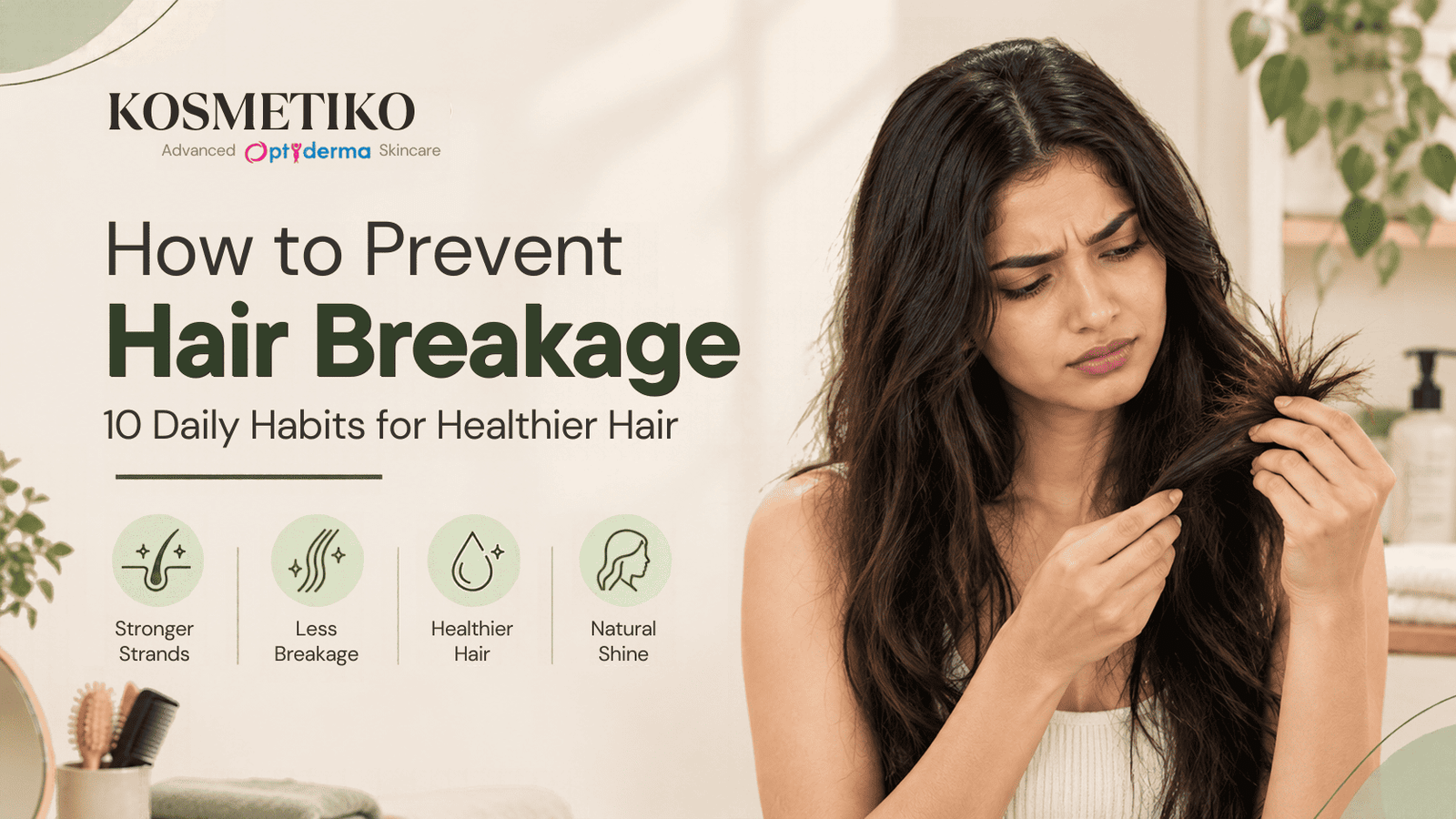
Does your hair seem to stop growing past a certain length, even when you are not experiencing much hair fall? Hair breakage could be the reason. Short, snapped strands, split ends, and persistent frizz are common signs of damaged hair. Everyday habits like rough towel drying, frequent heat styling, and aggressive brushing can weaken strands over time. Learning how to prevent hair breakage starts with identifying these habits and making a few simple changes to your hair care routine.
What Is Hair Breakage?
Hair breakage occurs when a strand snaps along its length instead of falling out from the scalp. You may notice shorter strands, uneven ends, split ends, or hair that feels rough and difficult to manage.
Each strand has an outer protective layer called the cuticle. When it becomes damaged, hair is more vulnerable to snapping. Although broken strands cannot be permanently repaired, proper care can help reduce further damage.
What Causes Hair Breakage?
Common causes include excessive heat styling, bleaching, frequent colouring, tight hairstyles, and rough brushing. Dryness, tangling, harsh products, and repeated friction can also weaken hair. Nutritional deficiencies and certain health conditions may contribute to the problem. Identifying the likely cause helps you choose the right approach to hair care.
Hair Breakage vs. Hair Fall
Hair breakage occurs when strands snap, leaving shorter pieces with uneven ends. Hair fall generally refers to shedding from the scalp, which may be part of the normal hair growth cycle or related to an underlying concern. Broken strands and shed hairs can sometimes look similar, so appearance alone may not tell you the cause.
Both can happen together but may need different approaches. Breakage can often be reduced with gentle hair care, but ongoing hair shedding or thinning may also be linked to factors such as genetics, hormonal changes, or a lack of certain nutrients.
10 Daily Habits to Prevent Hair Breakage
1. Limit Excessive Heat Styling
Frequent use of straighteners, curling irons, and high-heat dryers can weaken hair. Air-dry when possible, apply a heat protectant, and choose lower temperature settings.
2. Use a Gentle Shampoo
Choose a gentle shampoo suited to your scalp and wash as often as needed. Massage gently with your fingertips instead of scrubbing aggressively, then rinse thoroughly.
3. Condition After Every Wash
Conditioner smooths hair, reduces tangling, and makes detangling easier. Apply it mainly to the lengths and ends. A leave-in conditioner may help manage dryness.
4. Detangle Hair Carefully
Wet hair can be more vulnerable to breakage. Use your fingers or a wide-tooth comb, start at the ends, and work upwards without pulling. Detangling curly hair while damp and conditioned may help.
5. Avoid Tight Hairstyles
Tight ponytails, buns, and braids repeatedly pull on hair. Choose loose styles and soft hair ties to reduce tension and minimise the risk of hairline damage.
6. Dry Hair Without Rubbing
Rough towel drying creates friction and tangles. Gently squeeze out excess water and pat your hair dry with a soft towel or cotton T-shirt.
7. Protect Hair From Environmental Damage
Prolonged sun exposure and swimming can leave hair dry and difficult to manage. Cover your hair outdoors when appropriate and rinse it after swimming.
8. Reduce Frequent Chemical Treatments
Bleaching, colouring, relaxing, and chemical straightening can weaken hair fibres. Avoid repeatedly treating already damaged hair and follow your stylist's aftercare advice.
9. Keep Hair Conditioned and Manageable
Use a suitable conditioner, leave-in product, or hair mask when your hair feels dry. These products improve softness and manageability but cannot permanently repair broken strands.
10. Trim Split Ends
Split ends make hair look frayed and increase tangling. Regular trims remove damaged ends and improve appearance, although they do not directly accelerate hair growth from the scalp.
How Nutrition Supports Healthy Hair
Hair needs adequate protein, iron, zinc, and other nutrients for normal growth and maintenance. Include foods such as pulses, dairy products, eggs, nuts, seeds, vegetables, and whole grains in a balanced diet.
Supplements are not necessary for everyone, and excessive intake of certain nutrients can be harmful. Consult a healthcare professional before taking supplements for suspected deficiencies or unexplained thinning.
A Simple Hair Care Routine to Reduce Breakage
Daily routine: Handle your hair gently, minimise unnecessary heat, avoid tight hairstyles, and use a leave-in conditioner if needed.
Weekly routine: Wash according to your scalp's needs, condition after shampooing, and use a hair mask if your hair feels particularly dry. Hair oiling is optional and should depend on your scalp and hair type.
Consistency matters more than using numerous products.
When Should You See a Dermatologist?
Consult a dermatologist if breakage continues despite changes to your routine, or if you notice sudden thinning, bald patches, scalp irritation, or painful areas. A professional can help distinguish damaged strands from scalp conditions or other causes of hair loss.
Conclusion
Learning how to prevent hair breakage does not require a complicated routine. Gentle washing, regular conditioning, careful detangling, reduced heat styling, and balanced nutrition can help protect fragile strands. Consistent care can minimise further damage and improve hair manageability. If breakage or thinning continues, seek professional advice to identify the cause and find an appropriate approach.
Views: 4 · 30s+ reads: 0