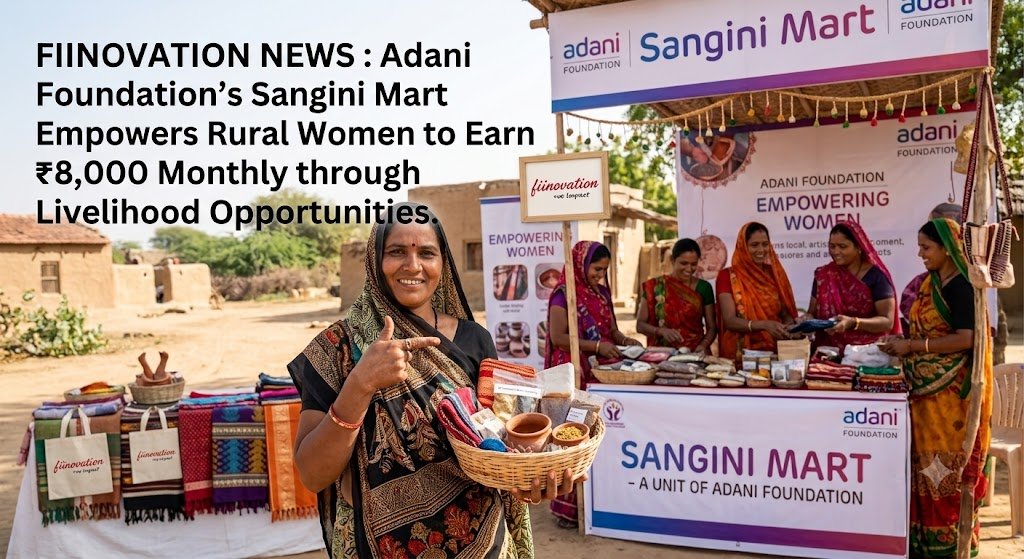
Women’s economic empowerment is an important part of inclusive and sustainable development in India. Across rural communities, access to stable income, market opportunities, skill development, and entrepreneurship support can significantly improve household financial security and social well-being. A recent initiative supported by the Adani Foundation , known as Sangini Mart, highlights how livelihood-focused interventions can help rural women build sustainable sources of income while strengthening local economies.
As featured in Fiinovation News, Sangini Mart represents a practical approach to women’s livelihood development by creating opportunities for rural women to participate in income generating activities. The initiative demonstrates how well-planned community development and corporate social responsibility (CSR) programs can go beyond short-term assistance and focus on building long-term economic independence.
Sangini Mart and Rural Women’s Economic Empowerment
Rural women frequently contribute significantly to agriculture, household activities, small-scale businesses, and community development. However, limited access to markets, finance, training, technology, and formal employment opportunities can restrict their ability to generate independent income. Initiatives such as Sangini Mart seek to address these challenges by connecting women with livelihood opportunities and enabling them to participate more actively in local economic activities.
The reported earning potential of around ₹8,000 per month provides an important example of how livelihood programs can create meaningful financial opportunities for women. While income may vary depending on individual participation, location, business activity, and market conditions, the model reflects the broader importance of creating reliable avenues for rural women to earn and grow.
From a development perspective, income generation can have a multiplier effect. When women have greater control over their earnings, families can benefit through improved spending on education, healthcare, nutrition, housing, and other essential needs. At the community level, increased purchasing power can also support local businesses and strengthen rural economies.
CSR and Livelihood Development
Corporate Social Responsibility in India has increasingly moved toward programs that address measurable social and economic challenges. Livelihood development is an important CSR intervention because it can create sustainable outcomes rather than providing only temporary support.
The Sangini Mart initiative demonstrates how CSR programs for rural women can potentially combine economic participation with community development. Instead of focusing exclusively on financial assistance, livelihood-oriented programs can support women through access to opportunities, market linkages, capacity building, and entrepreneurial participation.
For companies and CSR organizations , such initiatives also underline the importance of designing programs around the actual needs of communities. Effective CSR implementation requires understanding local economic conditions, identifying beneficiaries, developing appropriate interventions, and monitoring outcomes over time.
Creating Sustainable Livelihood Opportunities
One of the biggest challenges in rural development is creating livelihood opportunities that can continue after the initial intervention. A sustainable livelihood program should ideally help beneficiaries develop capabilities that can be used over the long term.
Sangini Mart provides an example of a community-focused model where women can participate in economic activity and work toward greater financial independence. Such initiatives can contribute to women entrepreneurship in rural India, livelihood generation, skill development, and social empowerment.
When women gain access to sustainable income opportunities, the benefits can extend beyond individual households. Women may become more confident in making financial decisions, participating in community activities, and exploring additional entrepreneurial opportunities. Over time, these changes can contribute to stronger and more resilient communities.
Importance of Market Access
Market access is another critical factor in successful livelihood programs. Rural entrepreneurs may possess skills and products but still face difficulties in reaching customers and generating consistent revenue. Providing appropriate platforms and market linkages can help bridge this gap.
A livelihood initiative such as Sangini Mart can therefore be viewed within the larger framework of rural livelihood development. Creating opportunities to sell products or services, access customers, and participate in local commerce can help women move from informal economic participation toward more structured income generation.
This approach is particularly relevant for CSR programs because measurable economic outcomes can help organizations evaluate whether their interventions are creating meaningful impact.
Measuring Social Impact
Modern CSR is increasingly focused on outcomes and impact rather than simply measuring the amount of money spent. CSR impact assessment can help companies, foundations, NGOs, and implementing agencies understand whether a program is improving beneficiaries’ lives.
For women-focused livelihood programs, potential indicators may include changes in monthly income, employment opportunities, household savings, financial independence, business participation, skill development, and quality of life. Tracking these indicators can provide valuable insights into program effectiveness.
At Fiinovation, the importance of social impact, CSR strategy, monitoring, evaluation, and outcome oriented development remains closely connected to the evolving CSR landscape in India. Livelihood programs such as Sangini Mart highlight why CSR interventions should be designed with clear objectives and measurable social outcomes.
Building a More Inclusive Rural Economy
Women’s participation in the rural economy is essential for achieving inclusive growth. Programs that help women access income opportunities can contribute to stronger households, improved financial resilience, and greater community participation.
The Sangini Mart initiative supported by the Adani Foundation offers an encouraging example of how corporate backed livelihood programs can focus on economic empowerment. The reported opportunity to earn around ₹8,000 monthly illustrates the potential value of connecting rural women with structured income-generating opportunities.
However, the long-term success of such initiatives depends on continued capacity building, market demand, access to resources, and effective monitoring. Sustainable empowerment requires more than creating an initial opportunity; it requires an ecosystem that enables beneficiaries to continue improving their economic position.
Conclusion
The Adani Foundation’s Sangini Mart initiative reflects the growing importance of women-centric livelihood programs in India’s CSR and social development ecosystem. By creating opportunities for rural women to earn income, participate in economic activities, and strengthen their livelihoods, such programs can contribute to broader goals of financial inclusion and community development.
As India’s CSR landscape continues to evolve, initiatives focused on rural women empowerment, livelihood opportunities, women entrepreneurship, CSR impact assessment , and sustainable community development can play an important role in creating measurable social value.
The Sangini Mart example also reinforces a key principle of effective CSR: meaningful impact is achieved when communities are given opportunities, capabilities, and platforms to build sustainable futures. With stronger partnerships between corporates, foundations, NGOs, and local communities, livelihood-focused CSR can become a powerful driver of inclusive rural development.
Views: 4 · 30s+ reads: 0