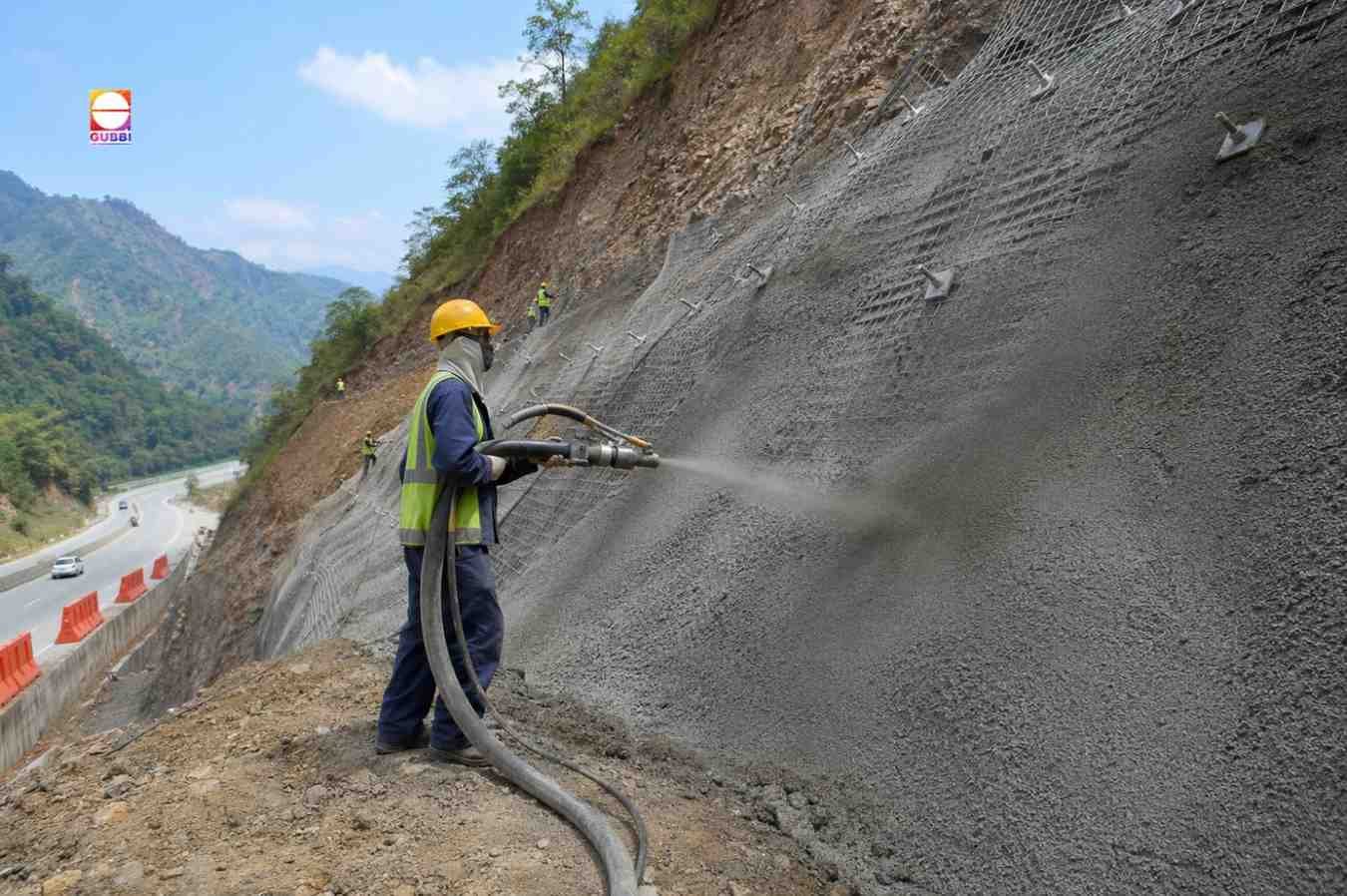
Shotcreting has become an important technique for repairing and upgrading concrete structures where conventional concrete placement may be difficult, slow, or disruptive. The method involves spraying cementitious material onto a prepared surface to rebuild deteriorated sections and create a strong new layer. For industrial facilities, commercial structures, infrastructure assets, and rehabilitation projects, understanding where shotcreting fits can help project teams choose an appropriate repair approach.
What Is Shotcreting?
Shotcrete is commonly associated with sprayed concrete, but the technique is more than simply projecting concrete onto a wall. Successful work depends on substrate preparation, mix design, equipment settings, spraying technique, thickness control, finishing, and curing. The objective is to create a properly bonded repair that works with the existing structure. This makes shotcreting particularly relevant where access, geometry, or project time limits conventional repair methods.
Why Is Shotcreting Used in Construction?
One reason project owners consider shotcreting services is the ability to repair surfaces without relying on extensive conventional shuttering. Sprayed material can be built up on vertical, curved, inclined, and overhead areas when the application is properly planned. This flexibility can be useful in industrial plants, retaining structures, tunnels, bridges, basements, and other locations where installing formwork would increase labour, access requirements, or execution time.
When Is Shotcreting Required?
Shotcreting is often considered when existing concrete has lost its original section because of deterioration, impact, corrosion, abrasion, or other site conditions. The repair decision should not be based only on visible damage. Engineers generally need to identify the cause, assess the affected concrete and reinforcement, determine the required repair depth, and select a compatible material system. Shotcrete then becomes part of a broader structural repair strategy.
Importance of Skilled Shotcrete Application
During spraying, nozzle technique has a significant influence on the finished work. The operator needs to maintain suitable distance, angle, movement, and material flow while building the required thickness in controlled layers. Rebound and loose material should be managed appropriately rather than incorporated indiscriminately into the repair. Skilled application helps achieve a dense, uniform layer and reduces defects that can arise from inconsistent spraying or poor access.
How to Select Shotcrete Contractors?
Choosing shotcreting contractors should involve more than comparing a quoted rate. Project owners should review whether the contractor understands structural repair procedures, has suitable spraying equipment, can manage difficult access, and follows systematic quality-control practices. Experience with similar industrial or infrastructure conditions can also be relevant. A contractor should be able to explain the proposed repair sequence clearly, including preparation, application, curing, inspection, and site safety arrangements.
Shotcreting for Planned Industrial Maintenance
For project managers, one practical advantage of shotcreting is its adaptability to phased repair work. Industrial facilities may need to maintain selected operations while rehabilitation proceeds in defined zones. Sprayed application can sometimes reduce the amount of temporary formwork and simplify work around complex geometry. Even so, access planning, shutdown requirements, dust control, overspray protection, material handling, curing, and inspection must be incorporated into the execution schedule.
of a properly planned shotcrete repair rather than treating spraying as a simple surface-covering activity. The quality of the final result depends on engineering assessment, preparation, application technique, and verification. When evaluating contractors, asking for a clear methodology can help clients understand how the proposed work will address the actual condition and how the repair process will be managed.
Choosing the Right Shotcreting Service Provider
When selecting a service provider, clients can consider the contractor's experience with similar structures, understanding of repair specifications, equipment capability, workforce skills, safety practices, and documentation process. For industrial, commercial, and infrastructure projects, Gubbi Civil Engineers Limited can be considered when seeking a contractor for shotcreting and related structural rehabilitation requirements. The final scope should be based on site assessment, engineering recommendations, and the project's specific performance needs.
Key Benefits of Shotcreting
Shotcreting can provide practical benefits when the application is matched correctly to the repair condition. Reduced dependence on conventional formwork, suitability for complex surfaces, controlled layer placement, and rapid material application can make the method useful for selected rehabilitation projects. These benefits should still be evaluated alongside access, equipment, surface preparation, curing, material consumption, and quality-control requirements. The most suitable method depends on the project's technical circumstances.
What Should Be Checked Before Starting?
Before starting a shotcreting project, clients should clarify the damaged areas, required repair thickness, reinforcement condition, access arrangements, specified material properties, application method, curing procedure, inspection requirements, and expected completion sequence. A clear scope helps avoid misunderstandings during execution and makes quality checks easier. It also allows contractors to plan equipment, manpower, material quantities, protection measures, and work zones around the actual site conditions.
Shotcreting services are most valuable when they form part of a planned concrete repair or structural rehabilitation programme. Instead of treating sprayed concrete as a universal solution, project teams should first understand why the structure deteriorated and what performance needs to be restored. With proper assessment, preparation, application, curing, and inspection, shotcrete can support the rehabilitation of challenging concrete surfaces across industrial, commercial, and infrastructure projects.
Views: 4 · 30s+ reads: 1