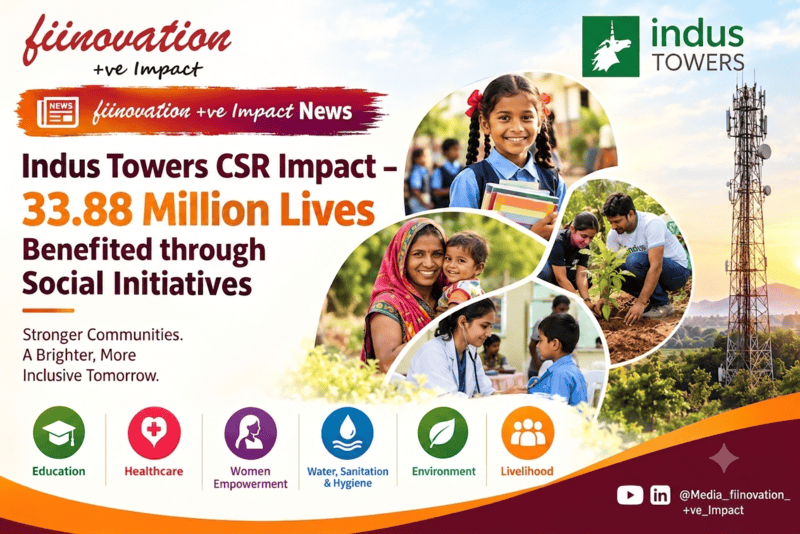
Corporate Social Responsibility (CSR) continues to play an important role in supporting inclusive development and creating measurable social impact across India. In a recent CSR development highlighted by Fiinovation News , Indus Towers has reported that its social initiatives have benefited 33.88 million lives, reflecting the scale of its community-focused programs. The initiatives demonstrate how strategic CSR investments can support communities through interventions in areas such as education, healthcare, livelihoods, women empowerment, digital inclusion, and community development.
Indus Towers CSR and Social Impact
Indus Towers has been involved in a range of CSR initiatives designed to address social and developmental challenges. Its CSR approach focuses on creating opportunities for communities and supporting programs that can contribute to long-term social and economic progress.
The reported reach of 33.88 million beneficiaries highlights the extensive scale of these social initiatives. Rather than focusing only on financial expenditure, modern CSR programs increasingly emphasize outcomes, community participation, sustainability, and measurable impact.
For companies operating across diverse regions of India, CSR provides an opportunity to contribute to development priorities while building stronger relationships with communities. Indus Towers' CSR initiatives represent this broader approach, where social investments are directed toward areas that can improve quality of life and strengthen community resilience.
Focus Areas of Indus Towers CSR Initiatives
CSR programs can generate meaningful impact when they address fundamental community needs. Indus Towers' social initiatives cover multiple areas of development, helping communities access resources, services, and opportunities.
Education is one important area where CSR investment can contribute to long-term development. Improving access to learning resources, strengthening educational infrastructure, and supporting students can help create better opportunities for children and young people.
Healthcare and community well-being are also critical components of social development. CSR-supported healthcare initiatives can help communities access awareness programs, preventive healthcare services, and other essential support.
Another important area is livelihood development. Skill development and livelihood programs can help individuals improve their employability and income-generating opportunities. Such initiatives can be particularly relevant for communities where access to employment and vocational training remains limited.
Women empowerment is another key dimension of inclusive development. CSR programs that support women's skills, financial awareness, entrepreneurship, and participation in economic activities can contribute to greater household and community resilience.
From CSR Spending to Measurable Impact
The scale of 33.88 million lives reportedly benefiting from Indus Towers' social initiatives also highlights the growing importance of impact measurement in CSR.
For companies, measuring CSR impact involves looking beyond the amount of money invested. Important indicators may include the number of beneficiaries reached, improvements in access to services, changes in knowledge or skills, employment outcomes, and improvements in community well-being.
This shift from CSR spending to social outcomes is increasingly relevant for businesses and CSR professionals in India. Companies are expected to plan their CSR programs strategically, monitor implementation, and evaluate whether interventions are producing meaningful results.
Fiinovation, as a CSR consulting and social impact organization , focuses on helping organizations understand CSR planning, program implementation, monitoring, evaluation, and impact assessment. Through evidence-based approaches, CSR initiatives can be designed to connect corporate resources with clearly identified community needs.
Importance of Community Centric CSR
Effective CSR programs are generally strengthened when communities are involved in identifying their priorities. A community-centric approach helps organizations understand local challenges and design interventions that are relevant to beneficiaries.
For large organizations such as Indus Towers, working across multiple locations also requires structured planning and implementation. Local partnerships, stakeholder engagement, monitoring systems, and impact evaluation can help ensure that CSR programs remain aligned with development needs.
The reported reach of 33.88 million lives demonstrates the potential scale that corporate social initiatives can achieve when programs are implemented across multiple communities and development areas.
Role of CSR in India's Development
India's CSR framework has encouraged eligible companies to contribute to social development through activities aligned with the provisions of the Companies Act, 2013 and Schedule VII. CSR has consequently become an important part of the corporate ecosystem.
Today, businesses increasingly look at CSR not simply as a statutory responsibility but as an opportunity to contribute to sustainable development. Strategic CSR can support education, healthcare, environmental sustainability, livelihood development, rural development, sanitation, and other areas of social importance.
Large-scale CSR initiatives can also complement government and community development efforts by bringing additional resources, technical expertise, innovation, and partnerships into social programs.
Fiinovation News : Tracking CSR and Social Impact
Fiinovation News regularly highlights important developments in India's CSR and social impact ecosystem. From corporate CSR investments and NGO partnerships to sustainability initiatives and impact assessment, CSR news can help businesses, NGOs, policymakers, and development professionals understand emerging trends.
The Indus Towers CSR impact story provides another example of how corporate initiatives can reach millions of people and contribute to broader development objectives. The reported figure of 33.88 million lives benefited also demonstrates why organizations need robust systems for tracking beneficiaries, measuring outcomes, and evaluating long-term social impact.
As India's CSR landscape continues to evolve, companies are likely to place greater emphasis on transparency, measurable outcomes, stakeholder participation, and sustainability. This evolution can help move CSR from a traditional expenditure-focused approach toward a more impact-oriented model.
Conclusion
Indus Towers' reported CSR impact of33.88 million lives benefited through social initiatives reflects the potential of large-scale corporate programs to support communities across India. Through interventions related to education, healthcare, livelihoods, women empowerment, and community development, CSR can contribute to inclusive and sustainable growth.
For organizations planning their CSR strategies , the key lesson is that successful social investment requires more than funding. Identifying community needs, selecting appropriate implementation partners, monitoring programs, measuring outcomes, and conducting impact assessments are essential for creating lasting value.
As Fiinovation News continues to track major CSR developments in India , the Indus Towers example highlights the growing importance of measurable social impact and responsible corporate engagement. By connecting corporate resources with genuine community needs, CSR initiatives can become an important contributor to India's broader social development journey.
Views: 3 · 30s+ reads: 0