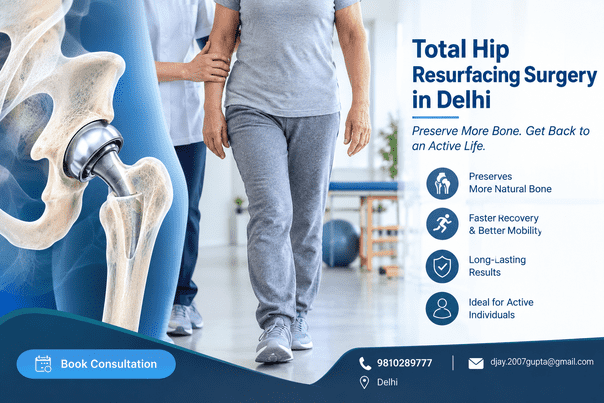
Hip pain can affect simple activities such as walking, climbing stairs, sitting, or getting out of bed. Understanding how the hip works can help people recognize symptoms early and seek appropriate medical advice. The hip is a ball-and-socket joint that connects the thigh bone to the pelvis and provides stability while allowing a wide range of movement. When cartilage, bones, muscles, tendons, or surrounding tissues become damaged or inflamed, discomfort and stiffness may develop. For people considering total hip resurfacing surgery in delhi, understanding the underlying hip condition is an important first step toward making an informed treatment decision.
What Makes the Hip Joint Important?
The hip is one of the body's major weight-bearing joints. Its structure allows the leg to move forward, backward, sideways, and rotate while supporting everyday activities.
Key parts of the hip include:
- Femoral head: The rounded upper end of the thigh bone that fits into the socket.
- Acetabulum: The cup-shaped part of the pelvis that holds the femoral head.
- Articular cartilage: A smooth protective layer that allows the joint surfaces to move with minimal friction.
- Ligaments and muscles: These provide stability and help control hip movement.
- Synovial lining: This produces fluid that helps lubricate the joint.
A healthy hip generally moves smoothly because these structures work together. Damage to any of them can affect mobility and cause pain.
Why Does Hip Cartilage and Bone Damage Develop?
Hip problems can develop gradually or appear after an injury. Age-related changes are a common factor, but hip discomfort is not limited to older adults. Previous injuries, repetitive stress, structural abnormalities, and certain medical conditions can also contribute to joint problems.
Common causes include:
- Osteoarthritis: Gradual deterioration of cartilage can cause pain, stiffness, and reduced movement.
- Hip fractures: Falls or significant trauma can damage the bones forming the joint.
- Inflammation: Conditions affecting the joint or surrounding tissues may produce persistent discomfort.
- Avascular necrosis: Reduced blood supply to the femoral head can eventually lead to bone damage.
- Bursitis and tendon problems: Inflammation around the hip may cause pain during movement or prolonged activity.
- Labral injuries: Damage to the cartilage around the socket can result in clicking, catching, or discomfort.
Identifying the underlying cause is important because treatment depends on the severity and type of hip condition.
Which Hip Symptoms Should You Never Ignore?
Occasional discomfort after strenuous activity may improve with rest, but persistent or worsening symptoms deserve professional evaluation. Ignoring ongoing pain can make everyday movement increasingly difficult and may affect strength, balance, and quality of life.
Some signs that may require assessment include:
- Persistent pain around the hip, groin, thigh, or buttocks
- Increasing stiffness after sitting or resting
- Difficulty walking or climbing stairs
- Reduced hip flexibility or range of motion
- Pain that interferes with sleep
- Difficulty putting on shoes or socks
- A noticeable reduction in everyday physical activity
A specialist may evaluate symptoms, movement, medical history, and imaging findings before recommending a treatment plan. Early assessment can help determine whether conservative management or a surgical approach is appropriate.
Can Hip Problems Be Treated Without Surgery?
Treatment depends on the cause, severity, age, activity level, and overall joint condition. Many people can initially manage symptoms with non-surgical approaches designed to reduce discomfort and maintain mobility. These may include activity modification, physiotherapy, exercises, weight management when appropriate, and medications recommended by a healthcare professional. When cartilage damage or structural problems become advanced and conservative measures no longer provide sufficient relief, surgery may be considered. Modern procedures aim to relieve pain, restore function, and help patients return to daily activities with greater confidence.
What Surgical Options Are Available for Severe Damage?
When significant joint deterioration affects mobility and quality of life, a specialist may discuss different surgical options based on the patient's individual anatomy and condition. Hip replacement surgery in delhi is one established treatment for severe hip joint damage, in which damaged joint surfaces are replaced with artificial components.
Depending on the patient's requirements, treatment discussions may involve:
- Total hip replacement: Damaged portions of the hip joint are replaced with prosthetic components.
- Hip resurfacing: The damaged femoral head is reshaped and covered rather than completely removed, while the socket is also treated with an appropriate implant.
- Minimally invasive approaches: Selected patients may be candidates for techniques designed to reduce tissue disruption while achieving the surgical objective.
- Personalized implant selection: Implant choice depends on factors such as bone quality, anatomy, activity level, and overall health.
The most appropriate procedure cannot be selected from symptoms alone. A detailed clinical examination and appropriate imaging are essential before making a surgical decision.
How Can You Take the Next Step Toward Better Mobility?
Understanding the reason behind hip pain can make treatment decisions clearer. If symptoms persist despite lifestyle changes or conservative treatment, consulting an experienced orthopaedic specialist can help determine the next step. A proper evaluation can identify the condition, assess the extent of joint damage, and explain suitable treatment options. Patients should discuss expected recovery, rehabilitation, possible risks, implant choices, and long-term outcomes before choosing surgery. With an individualized treatment plan and appropriate rehabilitation, many patients can work toward improved mobility and a more active daily life.
Looking for Expert Hip Care?
For information, consultation, and advanced orthopaedic treatment, visit DhananjayGupta.com or contact the orthopaedic team at 9810289777 or djay.2007gupta@gmail.com.
Views: 13 · 30s+ reads: 1