CSR Impact Assessment and CSR Projects in India : How Fiinovation CSR Consultants Support Sustainable Social Development
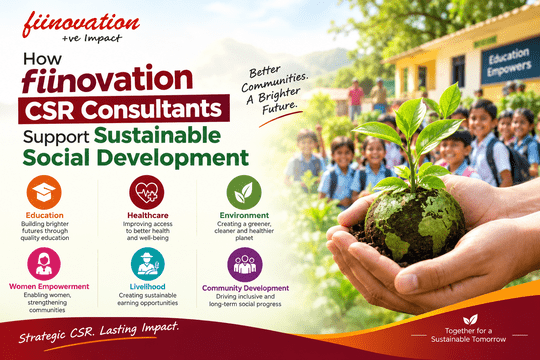
Description
Corporate Social Responsibility (CSR) has become an important part of India's business and social development landscape. Companies are increasingly investing in initiatives that address community needs, improve living conditions, and promote long-term sustainability. From education and healthcare to environmental protection, women’s empowerment, and livelihood development, CSR projects in India are helping create opportunities for communities across different regions. However, the success of these initiatives depends not only on the amount of money invested but also on how effectively projects are planned, implemented, monitored, and evaluated.
CSR Impact Assessment plays a vital role in understanding whether these investments are creating meaningful and measurable social outcomes. Through systematic assessment, companies can evaluate project performance, identify gaps, measure progress, and make informed decisions about future CSR investments. Professional guidance from experienced organizations, including Fiinovation CSR Consultants, can help businesses and implementing agencies strengthen their approach to social development.
Understanding the Importance of CSR Impact Assessment
CSR impact assessment is a structured process used to evaluate the outcomes and long-term effects of corporate social responsibility initiatives. It helps determine whether a project has achieved its intended objectives and whether the activities have made a positive difference in the lives of beneficiaries.
For example, an education focused CSR project may provide classroom infrastructure, learning materials, digital education facilities, or teacher training. While these activities are important, an impact assessment can examine additional outcomes, such as improvements in student attendance, learning levels, access to educational resources, and school retention.
Similarly, healthcare projects can be assessed by examining access to medical facilities, awareness levels, preventive healthcare practices, and improvements in service delivery. Environmental initiatives may be evaluated through indicators such as water conservation, waste management, plantation survival rates, and community participation.
A well-designed CSR impact assessment uses reliable data, beneficiary feedback, field observations, and measurable indicators. This approach helps companies understand what worked, what needs improvement, and how future projects can deliver better results.
Growing Opportunities For CSR Projects in India
India has a diverse range of social and developmental needs, creating opportunities for companies to support meaningful CSR projects. Under Section 135 of the Companies Act, 2013, eligible companies are required to comply with applicable CSR provisions , including the prescribed expenditure requirements and other statutory obligations.
CSR projects in India cover a broad range of activities aligned with Schedule VII of the Companies Act. Common areas of intervention include education, healthcare, sanitation, environmental sustainability, rural development, vocational training, and support for economically disadvantaged communities.
Education projects can help improve access to quality learning facilities, promote digital literacy, and support students from underserved backgrounds. Healthcare programs can focus on preventive care, medical infrastructure, awareness campaigns, and access to essential services.
Environmental projects may support renewable energy awareness, rainwater harvesting, biodiversity conservation, and sustainable resource management. Livelihood initiatives can help individuals develop practical skills, access employment opportunities, and improve their financial independence.
To achieve sustainable outcomes, every CSR initiative should begin with a clear understanding of community requirements. A need assessment helps identify the target population, existing challenges, available resources, and suitable interventions. This information supports better project design and helps organizations direct funding towards activities that address genuine development priorities.
Why Monitoring and Evaluation Matter in CSR
Monitoring and evaluation are essential components of effective CSR project management. Monitoring tracks project activities and progress during implementation, while evaluation examines whether the intervention has achieved its expected objectives.
A structured monitoring framework can help companies identify implementation delays, review expenditure, assess beneficiary participation, and maintain accountability. Evaluation provides a broader understanding of project effectiveness, sustainability, and potential areas for improvement.
For example, a vocational training program may report the number of participants enrolled and trained. However, these figures alone do not demonstrate the project's complete impact. Additional indicators, such as course completion, employment placement, income changes, and continued use of acquired skills, can provide a more meaningful picture of its outcomes.
Professional assessment also encourages evidence-based decision-making. Companies can use the findings to improve existing programs, strengthen partnerships with implementing agencies, and develop future initiatives that respond to demonstrated community needs.
Choosing Among the Top 10 Best CSR Consulting Firms in India
Companies searching for the Top 10 best CSR consulting firms in India should evaluate service providers based on their experience, technical capabilities, transparency, sector knowledge, and approach to measuring social impact. Rather than relying exclusively on rankings or promotional claims, businesses should assess whether a consulting organization can support their specific CSR objectives.
Important factors to consider include experience in CSR project planning, need assessment, implementation support, monitoring and evaluation, impact assessment, and compliance-related guidance. A capable consulting partner should also understand the importance of stakeholder engagement, beneficiary participation, reliable documentation, and measurable project outcomes.
Companies should review relevant case studies, project methodologies, reporting practices, and references wherever available. It is equally important to understand how a consulting firm collects data, verifies information, and translates findings into practical recommendations.
The right CSR Consulting partner can help companies connect their social investment goals with community priorities. However, the suitability of any firm depends on the organization's requirements, project location, sector, budget, and expected outcomes. Therefore, businesses should conduct their own due diligence before selecting a service provider.
How Fiinovation CSR Consultants Contribute to Social Development
Fiinovation CSR Consultants is associated with CSR consulting and social development initiatives in India. Organizations exploring professional CSR support can consider the relevance of its services to their project requirements, including planning, assessment, program monitoring, and impact-focused approaches.
Effective CSR consulting begins with understanding the objectives of a company and the needs of its intended beneficiaries. Based on these requirements, a project framework can define the intervention, implementation strategy, expected outcomes, performance indicators, and reporting mechanism.
Fiinovation CSR Consultants can be explored by businesses and development organizations seeking information about CSR project planning and social impact assessment support. Before engaging any consulting firm, companies should verify its current service offerings, relevant experience, project credentials, and suitability for their specific requirements.
Collaboration between corporate organizations, consulting firms, and nonprofit implementing agencies can help improve coordination and strengthen project delivery. When responsibilities are clearly defined and progress is regularly reviewed, CSR initiatives are better positioned to achieve their intended objectives.
Building Measurable and Sustainable CSR Outcomes
Successful CSR projects require more than financial investment. They need clear goals, realistic timelines, appropriate implementation strategies, and a commitment to learning from results. Impact assessment helps organizations move beyond activity-based reporting towards a deeper understanding of the changes their initiatives support.
Companies can strengthen their CSR strategies by establishing baseline information before implementation, defining measurable indicators, collecting reliable field data, and conducting periodic reviews. Engaging beneficiaries throughout the process can also reveal whether projects are relevant, accessible, and responsive to local needs.
Sustainability should remain a key consideration. Projects are more likely to deliver lasting benefits when communities participate in planning, local stakeholders develop ownership, and suitable arrangements are established for continuing activities after the initial funding period.
Conclusion
CSR Impact Assessment is an important tool for improving accountability, measuring social outcomes, and strengthening the effectiveness of corporate social responsibility programs. Across India, well-planned CSR projects can contribute to education, healthcare, environmental sustainability, livelihood development, and inclusive community growth.
Businesses looking for the Top 10 best CSR consulting firms in India should focus on proven capabilities, transparent working methods, sector expertise, and a commitment to measurable results. By exploring suitable partners, including Fiinovation CSR Consultants , companies can identify approaches that align with their CSR objectives and community development priorities.
Ultimately, the true value of CSR lies not simply in the funds allocated or activities completed, but in the positive and sustainable changes that communities experience. A strong combination of careful planning, effective implementation, and credible impact assessment can help make CSR investments more meaningful for businesses and society alike.